Brookline Homes for Sale & Luxury MA Real Estate
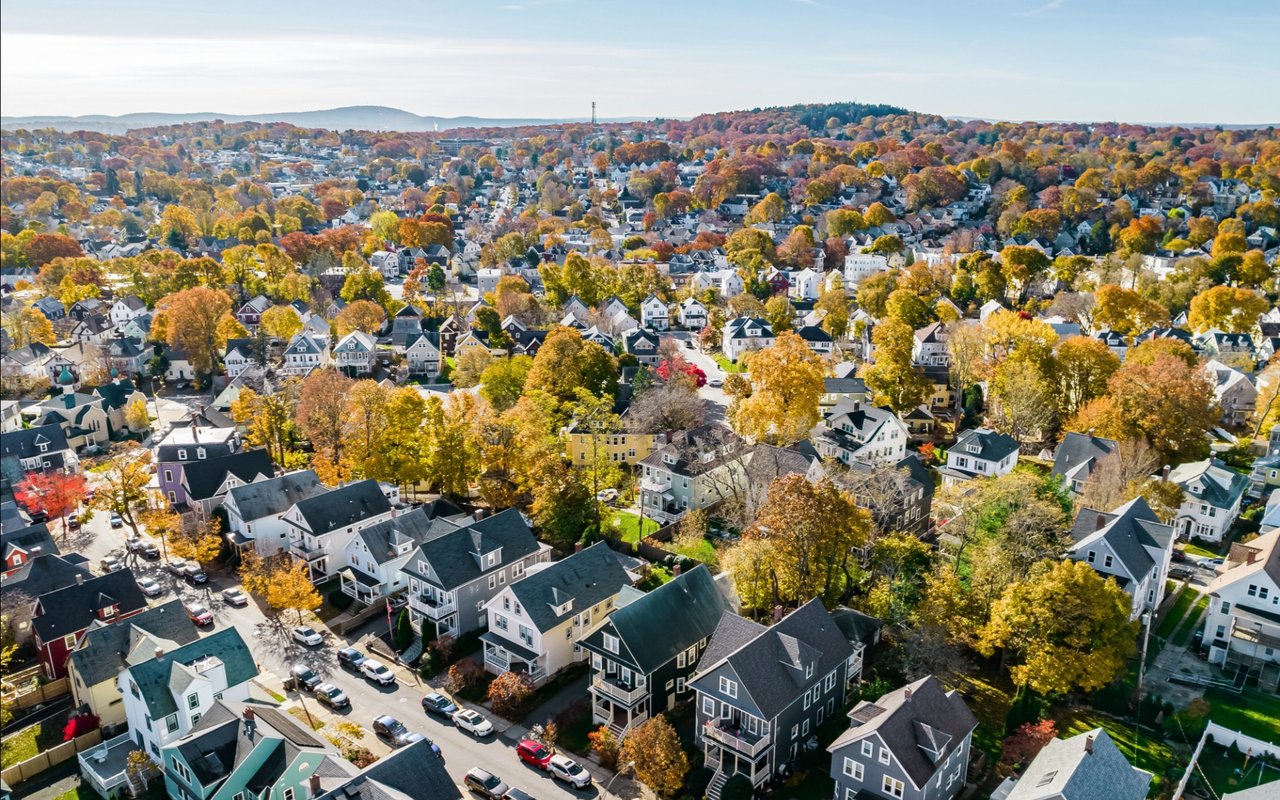
A thriving, socially-minded town surrounded by greenery.
62,822 people live in Brookline, where the median age is 35 and the average individual income is $94,739. Data provided by the U.S. Census Bureau.
Total Population
Median Age
Population Density
Average individual Income
A thriving, socially-minded town surrounded by greenery.
Brookline occupies a rare position in Greater Boston: it is physically encircled by the city, yet it governs itself as an independent town with its own school system, zoning authority, and civic culture. That independence is not incidental — it is the whole point. Residents choose Brookline precisely because they want proximity to Boston without surrendering to it.
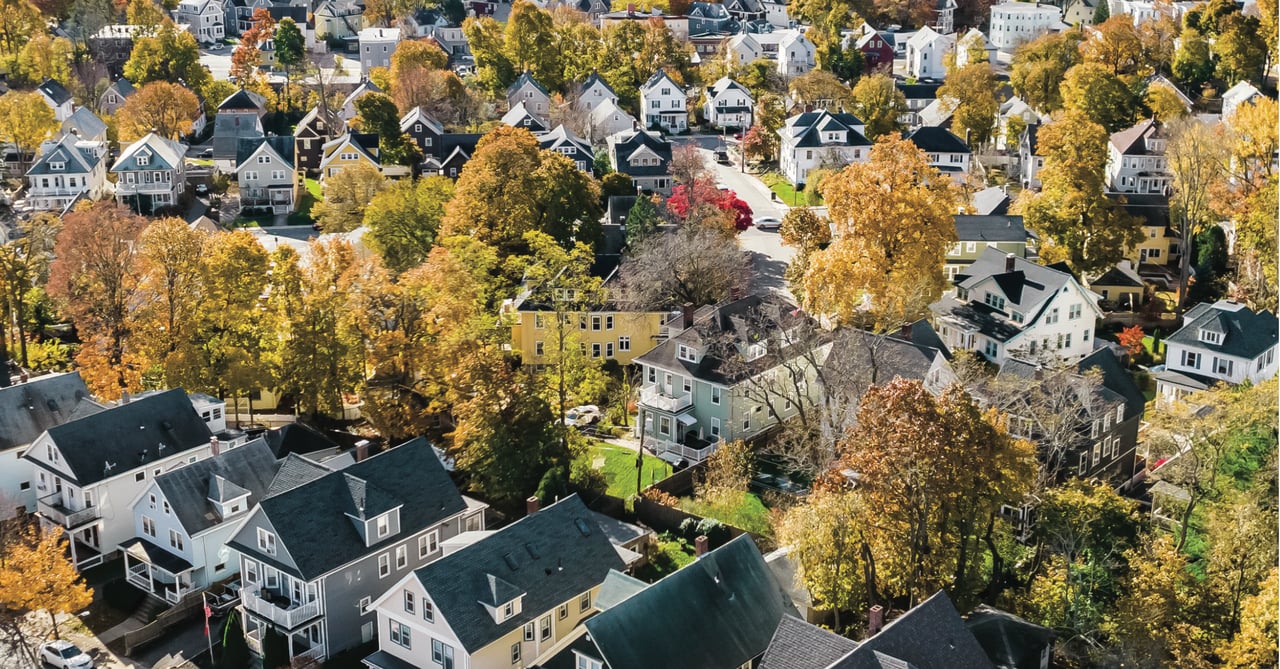
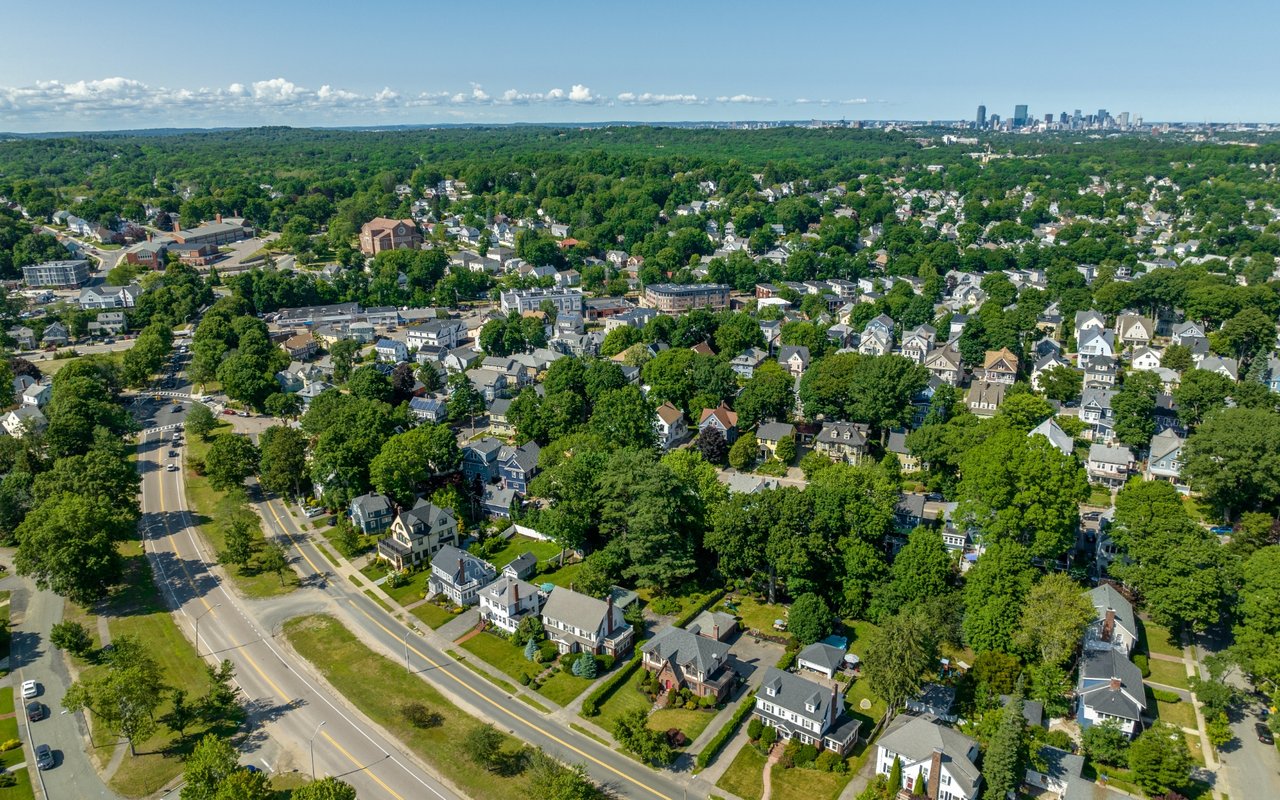
The town spans about 6.8 square miles, but within those boundaries you'll find a surprising range of environments. North Brookline, anchored by Coolidge Corner, feels urban in the best sense — walkable, dense with independent businesses, and connected to the rest of the city by the Green Line. South Brookline is an entirely different place: quieter, more suburban in character, with larger lots and a pace of life that bears no resemblance to the bustle two miles north.
The people who end up here tend to fall into recognizable categories. Medical and academic professionals drawn to Longwood and the universities. Families who have researched the school district with the same rigor they'd apply to any major investment. Longtime Bostonians who want to age in place without surrendering walkability. What they share is a preference for substance over flash — Brookline is sophisticated but decidedly unpretentious.
As of early 2026, Brookline's market has shifted from the frenzied conditions of 2021–2023 into something more deliberate. It remains one of the most expensive markets in the state, but the dynamic between buyers and sellers has rebalanced in ways that matter to anyone transacting here today.
Homes are spending an average of 35 to 55 days on market, up from roughly 21 days a year ago. That slowdown does not reflect weakness in demand so much as a recalibration of expectations on both sides. The sale-to-list price ratio is hovering around 100%, meaning sellers are generally getting their asking price, but the era of routine 5% to 10% over-ask offers has largely passed.
General price ranges as of April 2026:
Coolidge Corner and Aspinwall Hill remain the most expensive enclaves on a per-square-foot basis, while South Brookline currently shows the fastest pace with fewer days on market.
The most important thing to understand about Brookline's current market is that the headline numbers are misleading. Transaction volume is down — in some months by more than 60% year-over-year — but the average sale price has simultaneously spiked. The reason is a composition effect: the few homes that are actually closing tend to be at the high end. A single $7M estate has an outsized impact on the monthly average when total sales volume is thin.
The underlying trends worth tracking:
Inventory has loosened modestly, with new listings up roughly 3.5% to 15% year-over-year depending on the segment. That is the most buyer-friendly inventory environment in nearly three years, though "favorable" is relative in a town where entry-level condos still open above $1M.
There is a widening gap between turnkey properties and homes that need work. Renovated, move-in-ready homes are commanding roughly $820 to $850 per square foot and still attracting competitive interest. Homes requiring meaningful updates are sitting longer and seeing price reductions at a rate that would have been unthinkable in 2022.
Looking ahead, economists broadly expect flat to low-single-digit appreciation through the remainder of 2026. Brookline's property tax burden — median single-family annual bills now frequently exceeding $20,000 — is beginning to function as an affordability ceiling that constrains how much further prices can move in the mid-market.
Brookline's luxury market, generally defined as properties above $3M, operates under different conditions than the rest of the town. Interest rates, which have meaningfully dampened mid-market activity, have a much smaller effect on buyers in this segment. The constraint here is not financing — it is supply.
The true luxury tier begins around $5M. Storied estates in Fisher Hill and Chestnut Hill regularly list between $10M and $20M, and the most significant transactions often never appear on the MLS at all. Brookline has a well-established shadow market of pocket listings and off-market introductions, particularly for properties with recognized architectural pedigree or substantial acreage.
Luxury buyers in this town have specific preferences. Victorian and Colonial estates with intact original detail command premiums that newer construction cannot match. Mid-century modern properties on larger lots in South Brookline attract a different buyer profile but see equally fierce competition when well-presented. What this segment shares is a focus on quality and irreplaceability — buyers are not choosing Brookline's $10M market because it is cheaper than alternatives. They are here because there is nothing else quite like it within a 20-minute drive of downtown Boston.
Purchasing in Brookline requires patience, local knowledge, and a realistic understanding of what "competitive" looks like in a market that has cooled but has not softened.
The frenzy of 2021 is gone. Buyers are successfully retaining home inspection contingencies again, which was effectively impossible three years ago. Financing contingencies remain common in the mid-market, though cash offers still dominate the luxury tier. The average home closes at approximately 100.6% of list price — enough to confirm that lowball offers are rarely productive, but far from the 107% environment buyers were navigating during the peak.
For condos in desirable North Brookline locations, expect to encounter two to three competing offers on anything well-priced and move-in ready. The single-family market in South Brookline moves more selectively, with longer negotiation windows and more room for buyer due diligence.
Property types you'll encounter most frequently:
One detail that catches out-of-state buyers: before going under contract on any older property, verify whether it sits within a Local Historic District. In those areas, exterior changes — including something as simple as replacing windows or repainting — can require formal town approval. It does not make these homes undesirable, but it changes the renovation calculus in ways worth understanding before closing.
The list-it-and-wait approach that worked reliably from 2020 through early 2023 has stopped working. Today's Brookline sellers need a sharper strategy, and the data supports moving quickly when the numbers are not immediately confirmed by the market.
Pricing is the central lever. Approximately 14% of Brookline listings are currently experiencing price reductions — a high figure for this town — which reflects what happens when sellers price aspirationally into a market that no longer rewards it. The most effective approach is to price at or just below the most recent comparable sales in your specific sub-market, generate strong initial traffic, and convert that traffic into offers before the listing goes stale. Properties that do not receive an offer within 14 days face a 36% higher likelihood of requiring a price reduction.
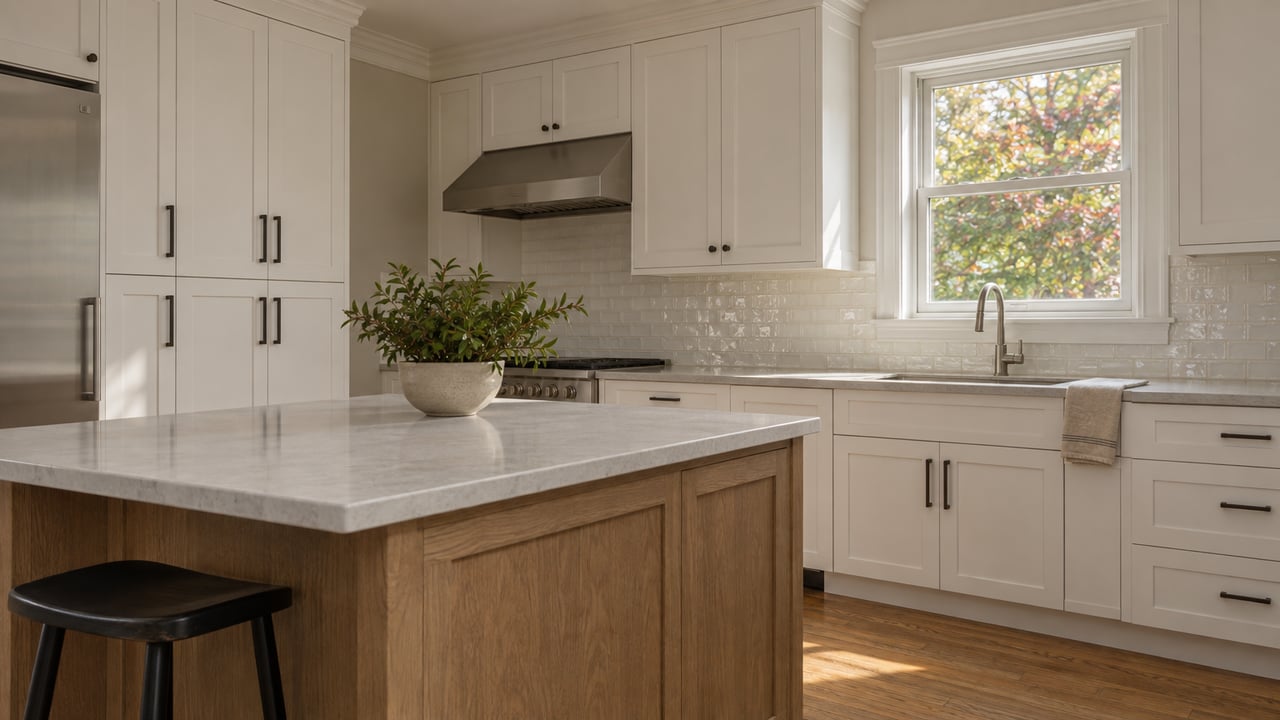
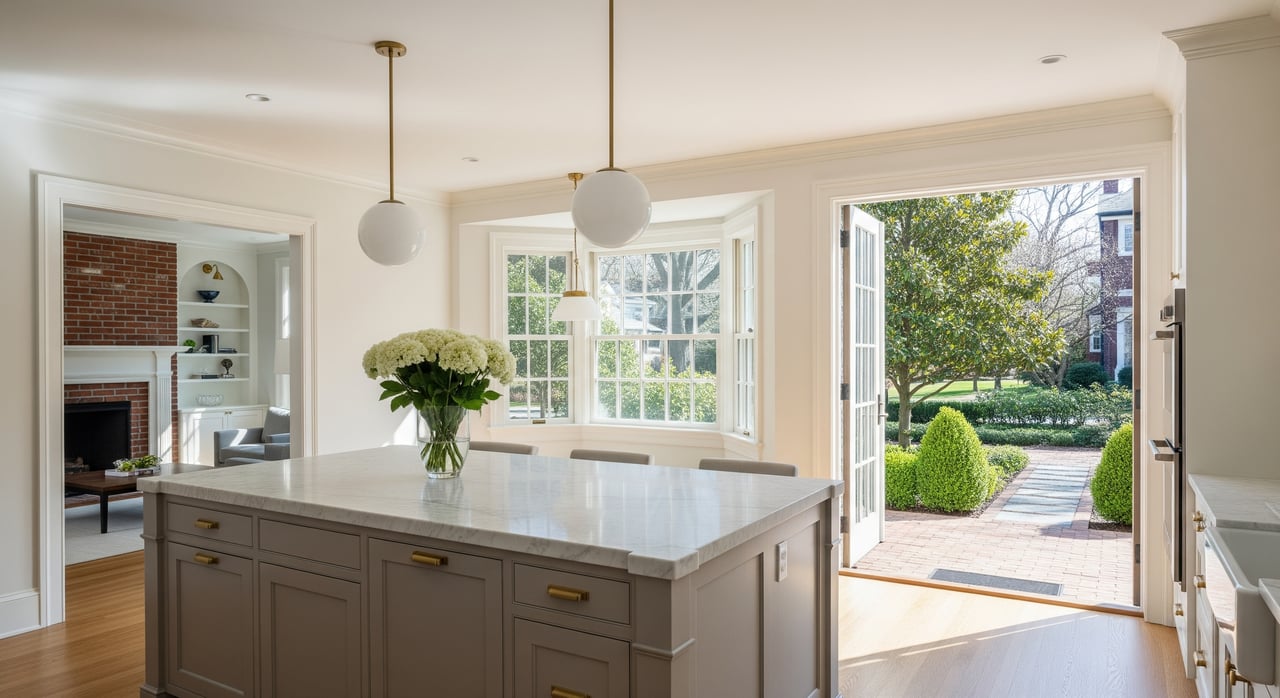
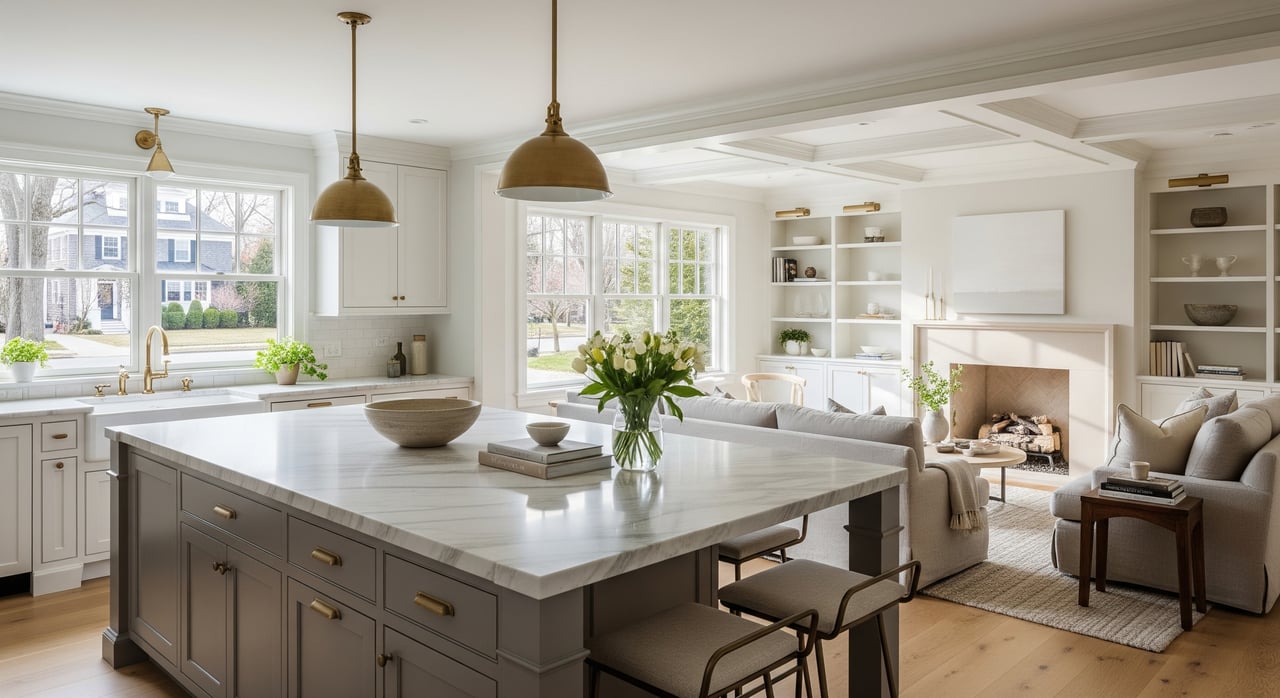
Staging has become non-negotiable. Brookline's Victorian and Colonial stock has undeniable character, but buyers in 2026 are not doing mental renovation math — they want to see a finished product. High-quality photography and 3D tours are baseline expectations. Refreshing kitchens and baths with neutral, high-end finishes has consistently shown a 2x to 3x return on investment at closing. The "project" discount buyers are demanding currently exceeds the actual cost of the work, which means sellers who invest in pre-sale preparation are better positioned financially than those who do not.
Current average days on market is 35 to 55 days for most residential properties, though well-positioned condos in Coolidge Corner are still going pending in under 20 days.
This is one of the more genuinely complex rent-versus-buy calculations in the Boston metro, and the answer depends almost entirely on how long you intend to stay.
| Renting (2BR) | Buying (Median Condo) | |
|---|---|---|
| Monthly Cost | $3,600–$4,400 | $7,200–$7,500 (P&I + fees) |
| Upfront Cost | First/last/security + broker fee | ~$260K+ (20% down) |
| Equity Growth | None | ~5–6% historic annual appreciation |
| Flexibility | High | Requires 5+ years to recoup costs |
With mortgage rates near 6.2%, the monthly cost of owning a median Brookline condo is roughly double what renting an equivalent space costs. For anyone planning to stay fewer than five to seven years, renting is currently the stronger financial move. Your capital stays liquid, and you avoid carrying costs that would only partially be offset by appreciation over a short horizon.
The calculus flips for long-term residents. Rents in Brookline have risen by nearly $350 per month over the past year alone. Buying locks in your housing cost basis in a town where rents are structurally unlikely to fall. For families anchored here by the school system — which realistically means a ten-plus-year commitment — ownership remains the most effective hedge against that ongoing appreciation.
Brookline's price-to-rent ratio currently sits above 25, which places it firmly in the range where most financial frameworks favor renting as a short-term strategy and buying as a long-term wealth and lifestyle decision.
Pricing in Brookline in 2026 is both a data exercise and a psychology exercise, and the two are not always pointing in the same direction.
The most important thing to understand is that Brookline's sub-markets are currently decoupled. Using a luxury estate sale in Fisher Hill to justify a condo price in Coolidge Corner is a mistake that will cost you time and negotiating leverage. Price-per-square-foot analysis needs to be anchored to your specific property type, your specific school zone, and comparable homes that closed within the last 60 to 90 days — not 120.
School zone boundaries carry real monetary weight here. Two structurally identical condos on different sides of a Lawrence versus Pierce boundary line will not trade at the same price, and any pricing strategy that ignores that is leaving information on the table.
The "condition discount" in today's market is steeper than the actual cost of deferred maintenance. If your home needs a roof replacement or a kitchen update, pricing at the last comparable sale and expecting buyers to absorb the work mentally is a losing strategy. The market is currently pricing project homes below the cost of the repairs themselves, which means sellers in this position should either invest in pre-sale improvements or price the discount in from the start.
Finally, the first two weeks matter more than any other period in your listing's life. Properties that are not generating offer conversations by day 14 are being passed over, not considered. If you are not getting traffic in that window, the price is the message.
Moving to Brookline from outside the area involves several decisions that are less obvious than they appear, and getting them right before signing a lease or a purchase agreement will save you significant time and money.
The school zone question comes first. Brookline operates a K-8 neighborhood school model, meaning your specific street address determines which elementary and middle school your children attend. All students eventually converge at Brookline High School, but the nine years before that are dictated entirely by geography. Two houses on opposite sides of the same block can feed different schools, and those schools have meaningfully different programming, facility quality, and community cultures. Before making any housing decision, verify the school zone assignment through the town directly — not through an online tool that may be out of date.
The overnight parking ban is not a minor inconvenience to plan around — it is a binding constraint. Brookline prohibits parking on public streets between 2:00 AM and 6:00 AM, no exceptions. If you have two cars, your property needs two deeded spaces or a private driveway. There is no practical workaround.
Neighborhood character varies more than it appears on a map. North Brookline feels like a walkable urban neighborhood: dense, transit-connected, active at street level. South Brookline is quieter, more spread out, and effectively car-dependent beyond local errands. Many families new to the area choose to rent in one neighborhood before committing to a purchase, specifically to confirm which version of Brookline fits their day-to-day lives. A one-year lease is often the most efficient way to make that determination.
For professionals, the Longwood Medical Area is a significant pull — many of the country's leading hospitals are within a comfortable bike ride or short Green Line trip from most of Brookline. The town is also a practical base for anyone working at Harvard, MIT, or any of the Route 128 technology corridor companies.
More than 85% of Brookline residents hold a bachelor's degree or higher, making it one of the most educated communities in the country by that measure. The resident mix reflects the town's geography and institutional neighbors.
Medical and academic professionals make up a large portion of the population. Proximity to the Longwood Medical Area brings surgeons, researchers, and hospital administrators who commute by foot, bike, or Green Line. University faculty from Harvard, MIT, Boston University, and Northeastern are a steady presence in the denser northern neighborhoods.
Families are drawn primarily by the schools. Brookline's K-8 system has a national reputation, and once families arrive for the schools, the town tends to keep them. Life for this group is organized around the neighborhood school's social calendar, the Green Dog off-leash hours, and the Brookline Teen Center as children get older.
A significant older population chooses Brookline specifically for its walkability. Access to the Coolidge Corner Theatre, the Senior Center, Wegmans, and a dense concentration of restaurants and services allows for a genuinely car-free lifestyle that is uncommon in communities of this character. The town also has a long-established and active Jewish community that has shaped much of the cultural and commercial identity of North Brookline.
What is harder to quantify but worth naming: Brookline has a strong civic culture. Town meeting is not a formality here. Residents engage with local government at rates that would be unusual in most communities, and that engagement shows up in the quality of the parks, the schools, and the public realm generally.
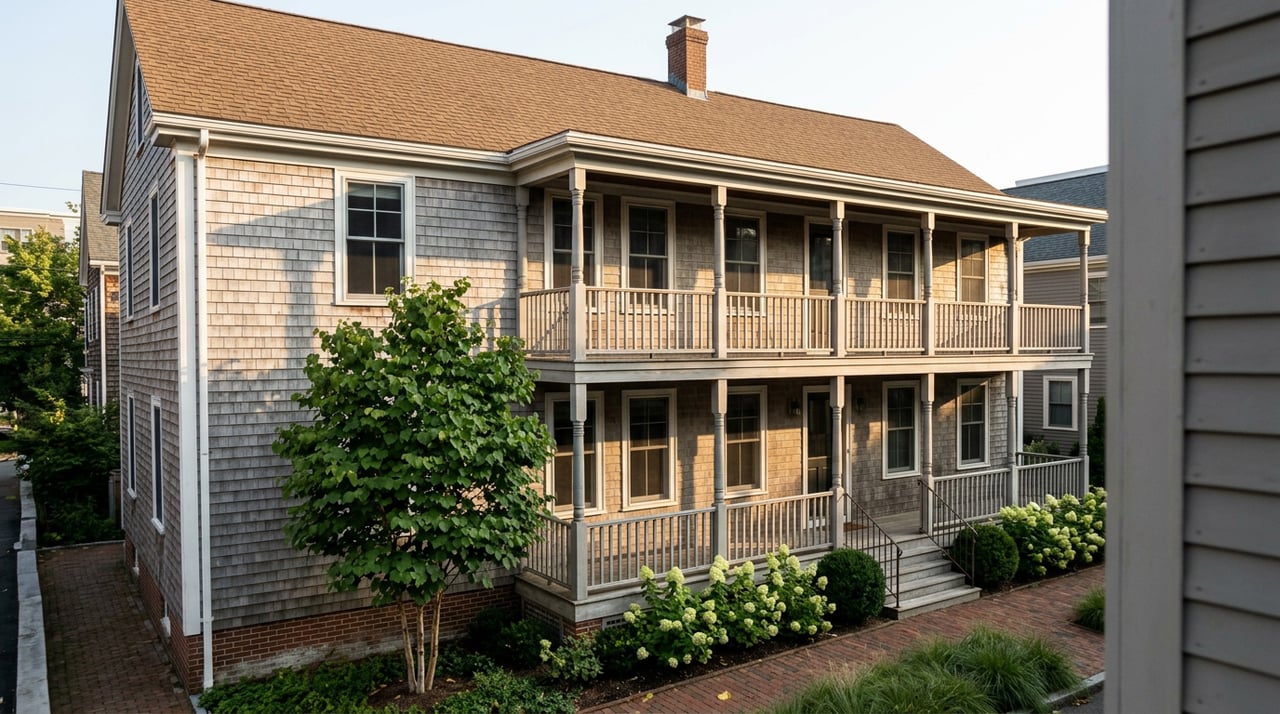
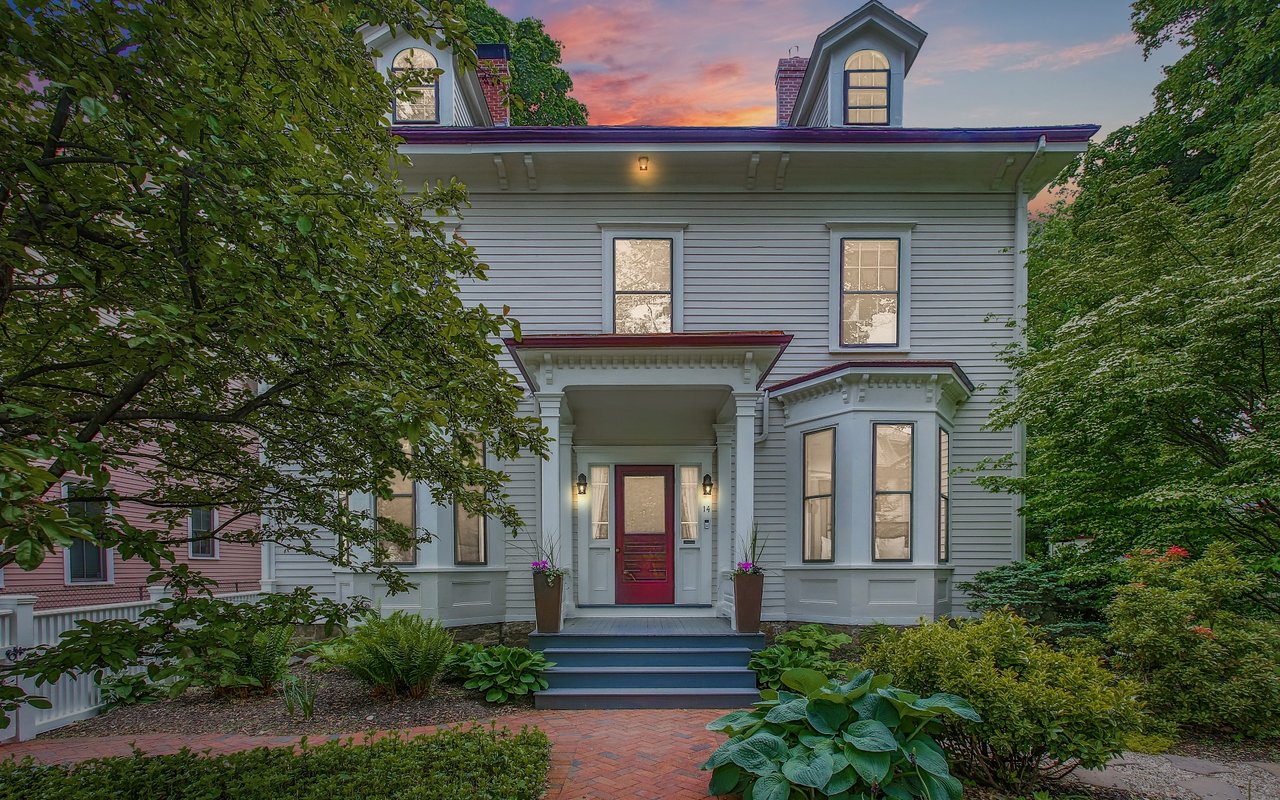
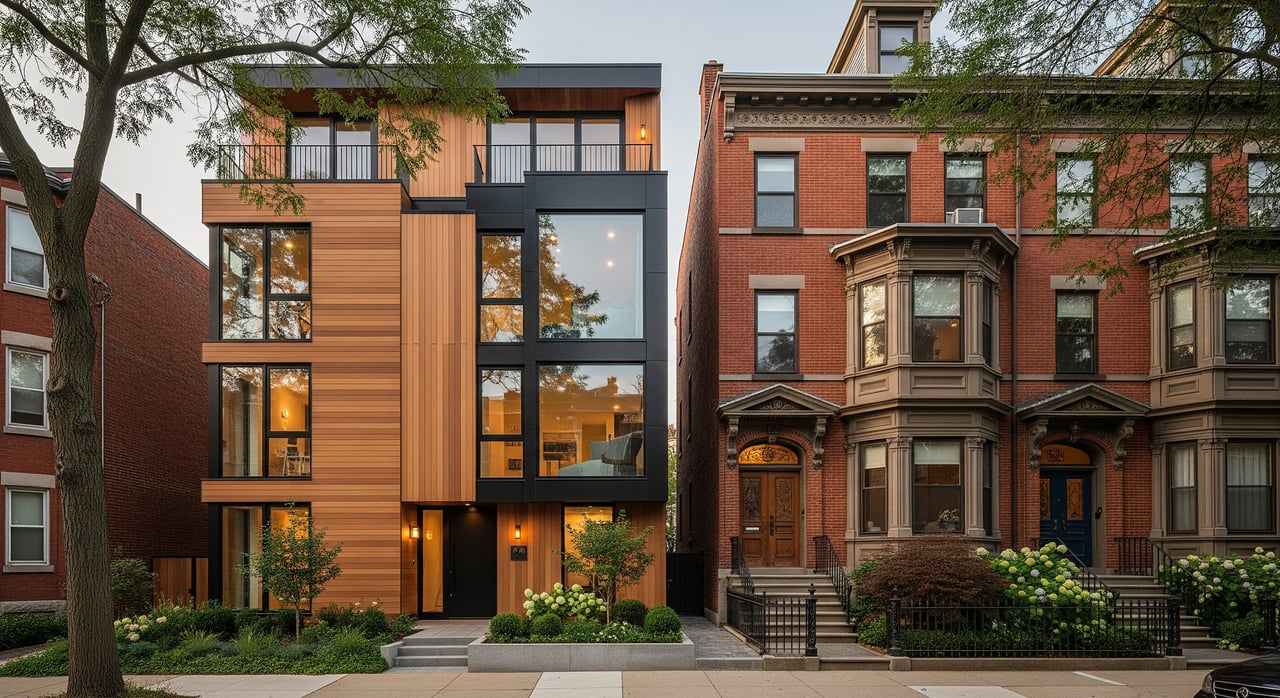
Brookline is effectively an outdoor museum of American residential architecture, and the town's preservation instincts have kept the historic fabric more intact than most comparable communities.
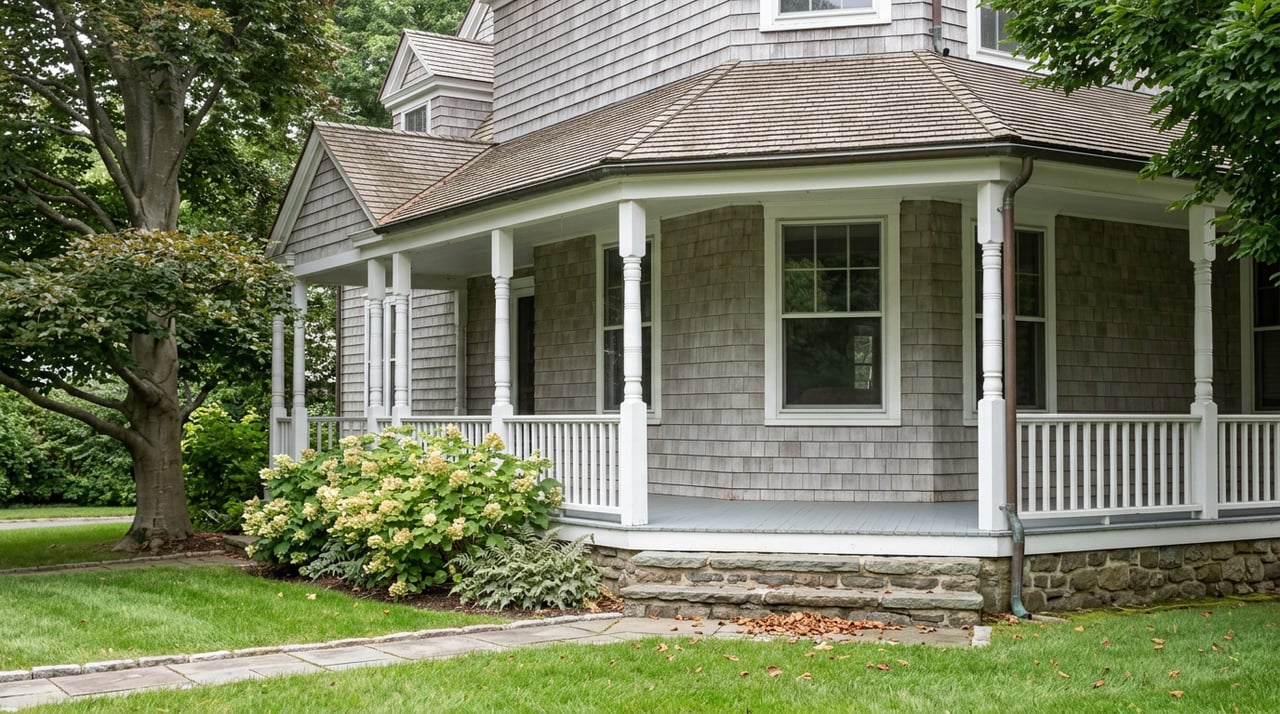
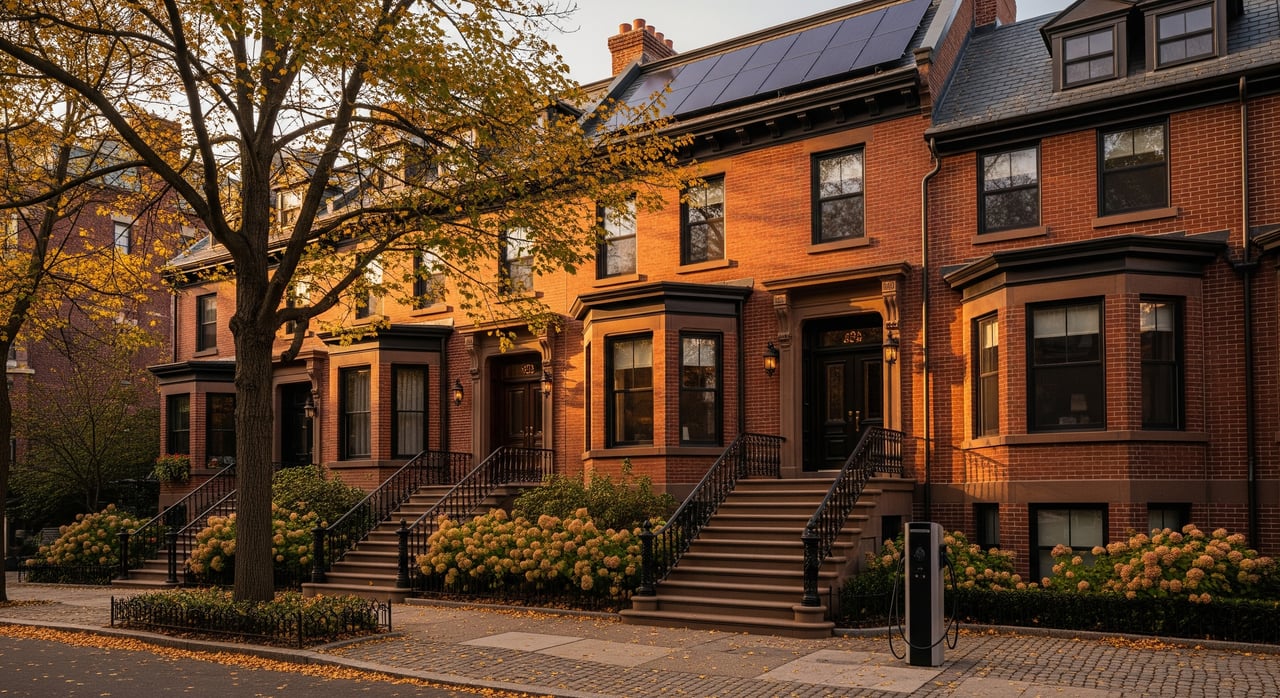
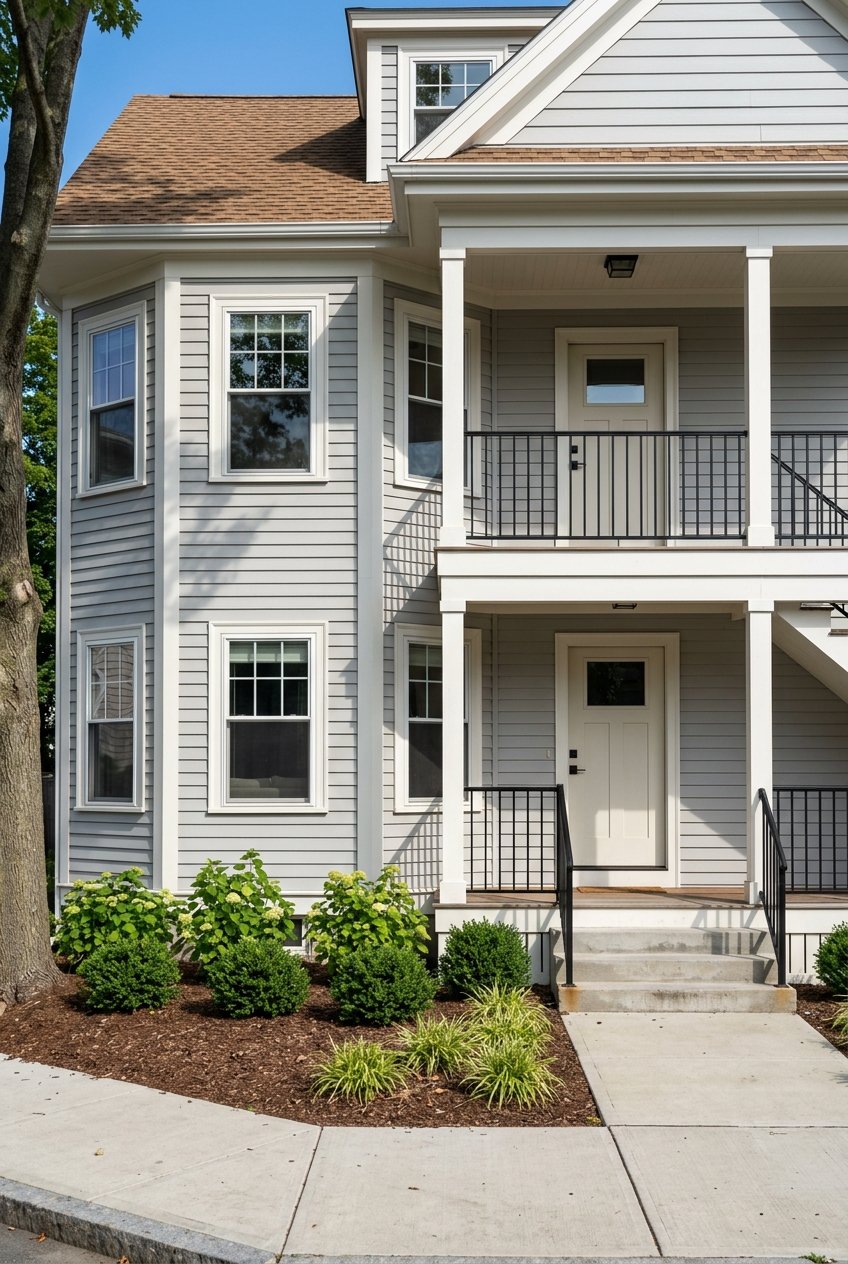
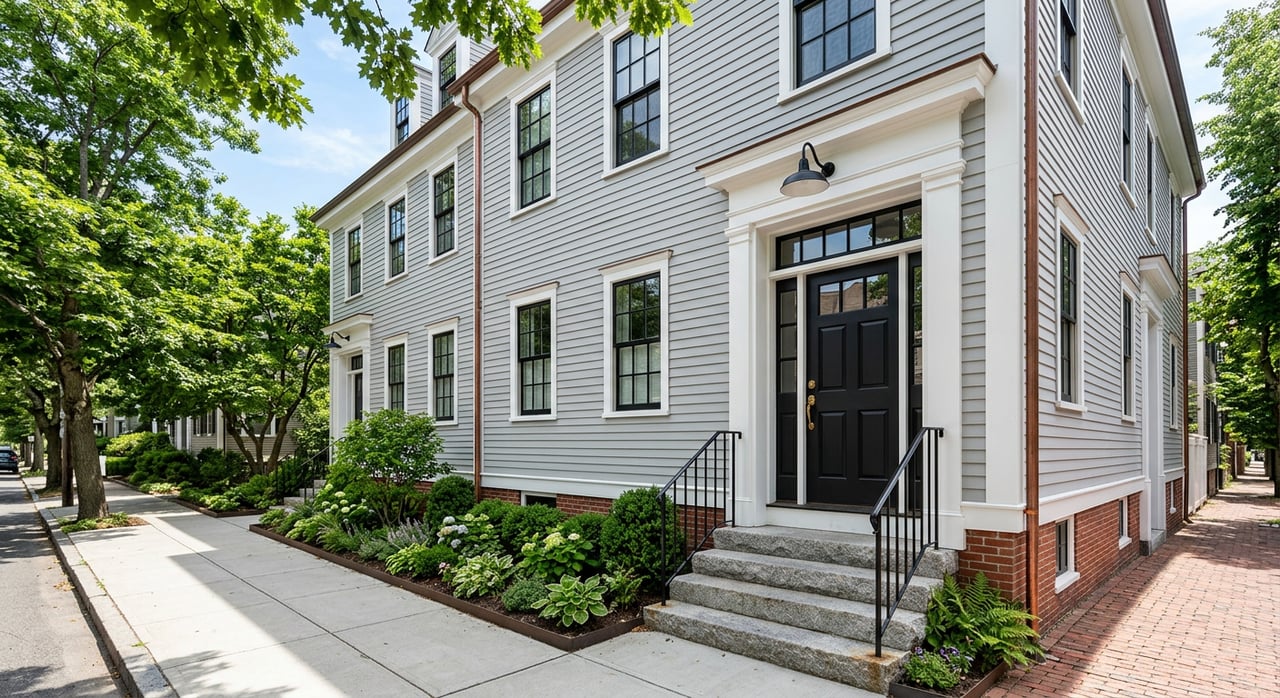
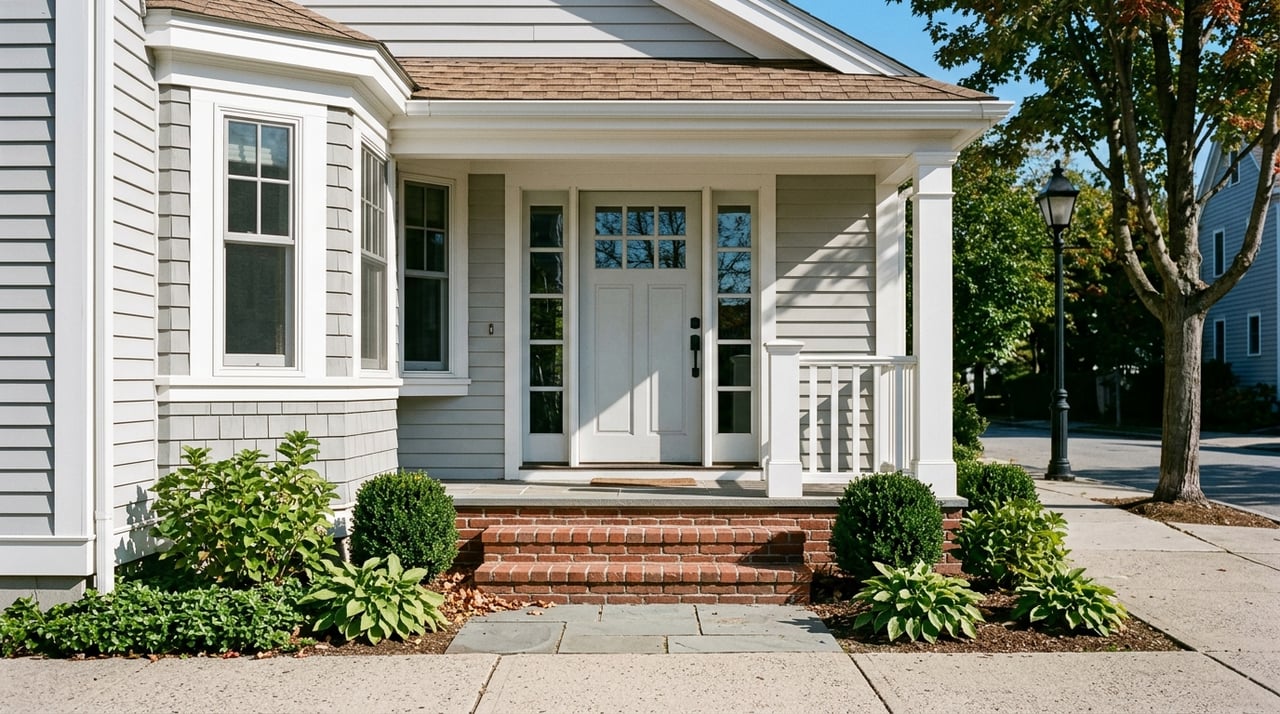
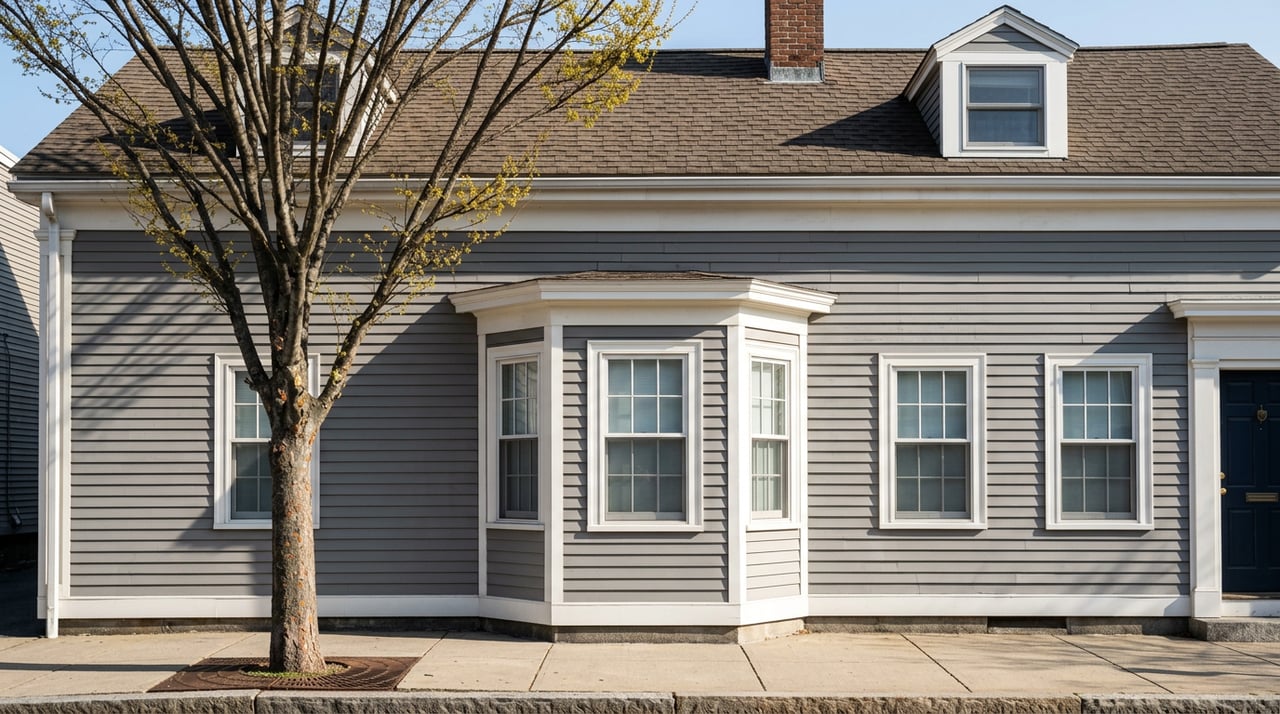
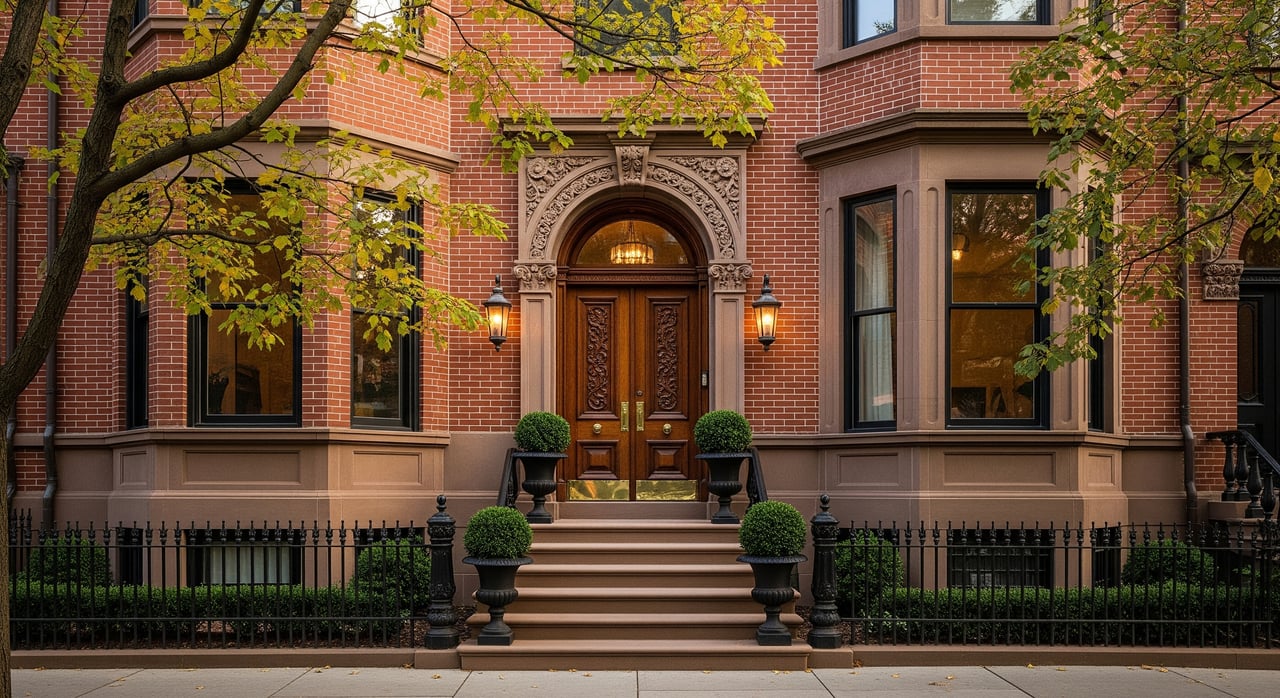
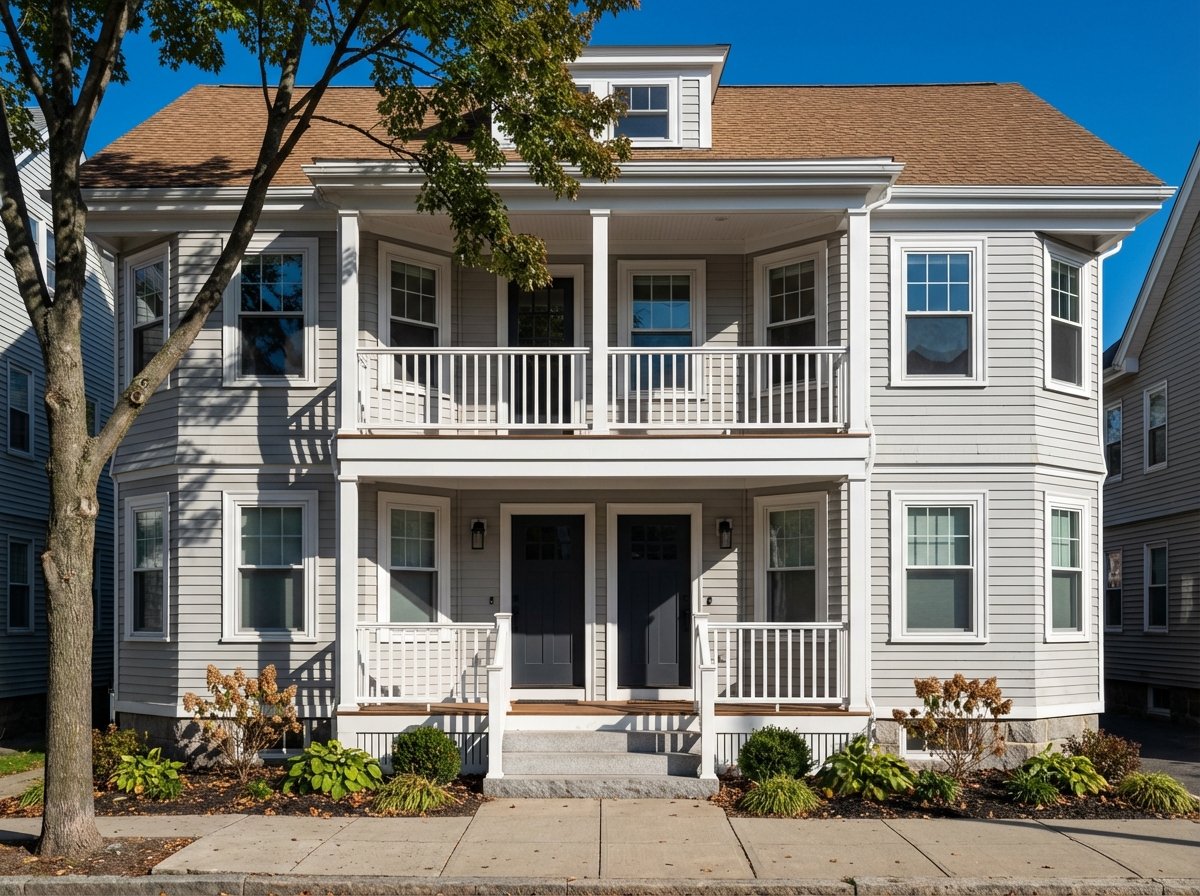
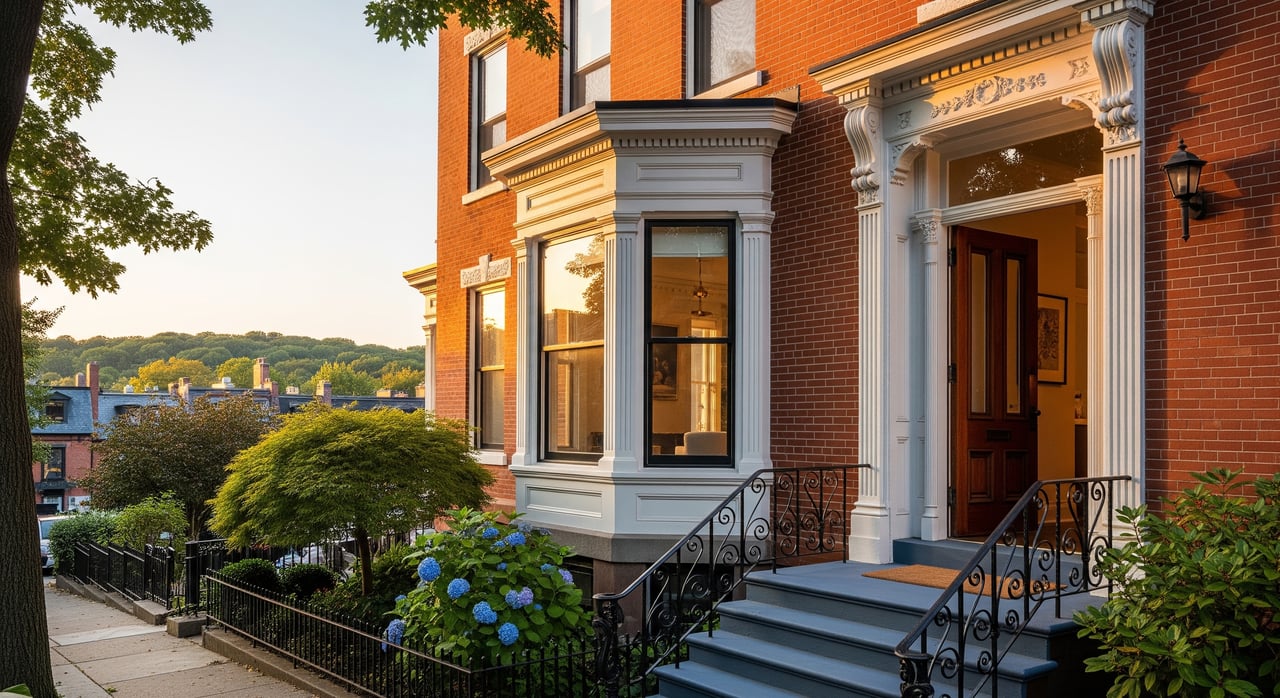
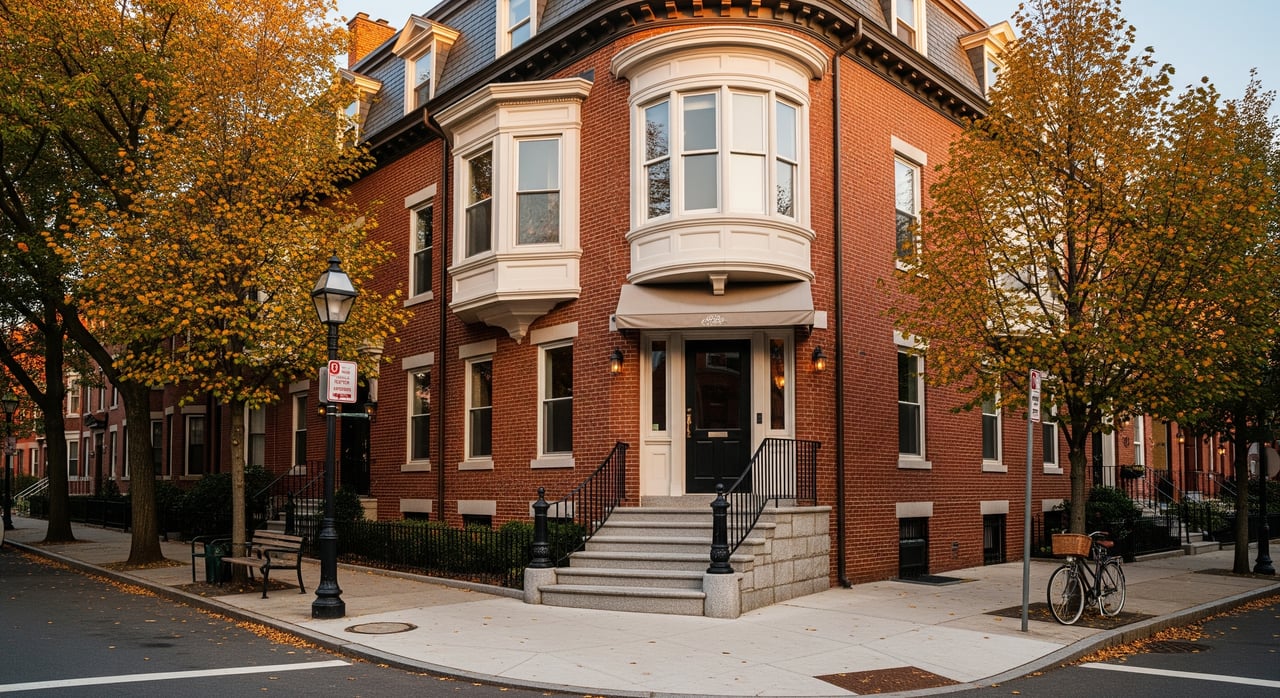
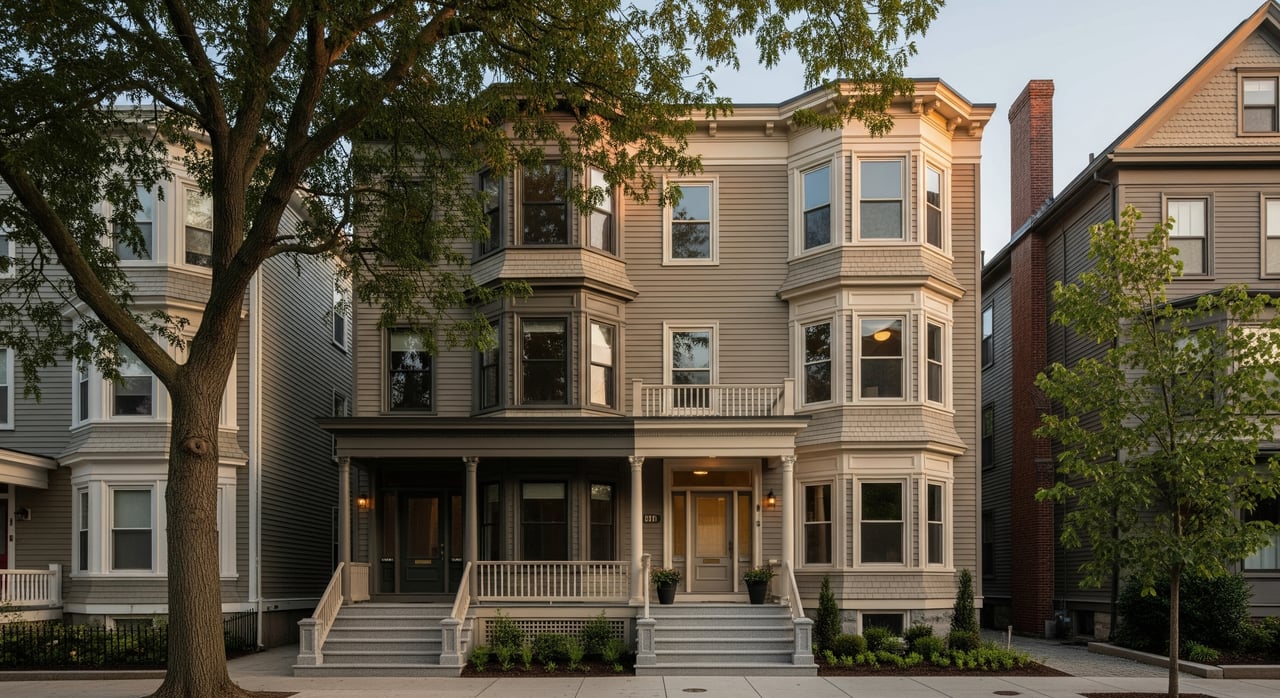
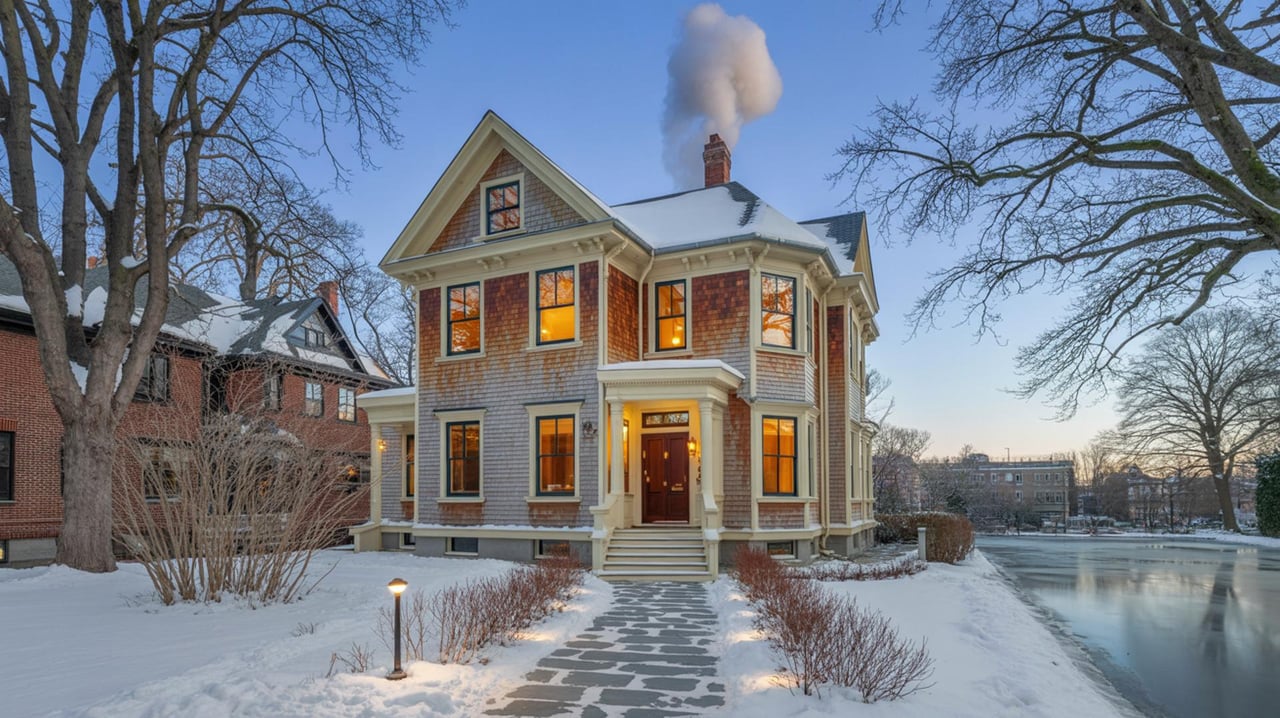
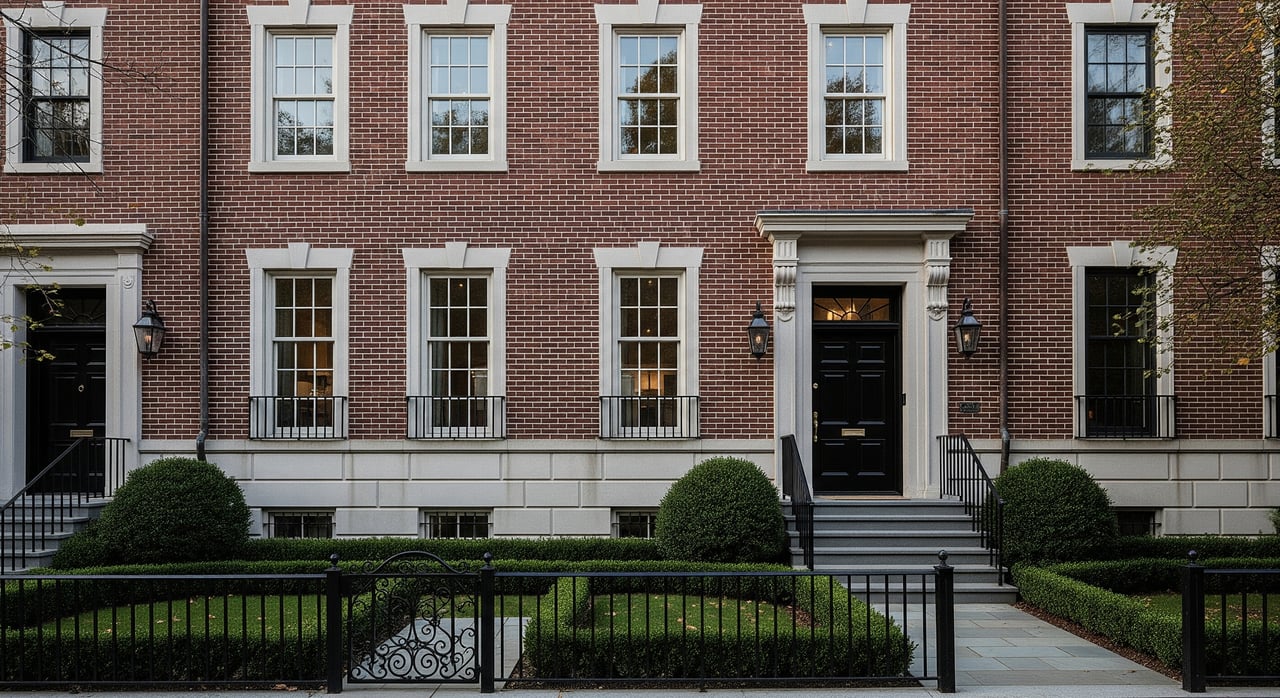
The dominant style in North Brookline is Victorian and Queen Anne, built between roughly 1880 and 1910. Steep gables, wraparound porches, and ornate "gingerbread" trim are common. Many of these buildings have been converted into luxury condos with significant care, retaining the exterior character while modernizing the interiors. The triple-decker — a three-story stacked flat that is quintessentially New England — appears throughout the denser neighborhoods and offers some of the town's more accessible entry points into ownership.
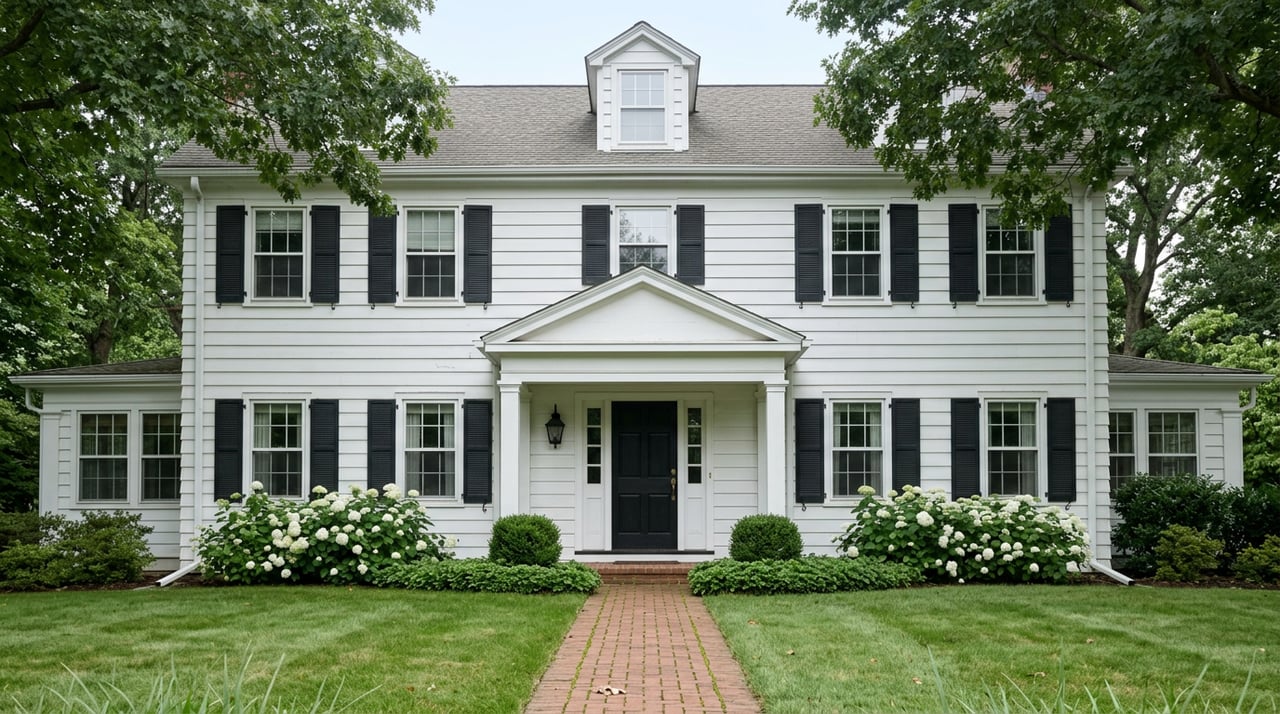
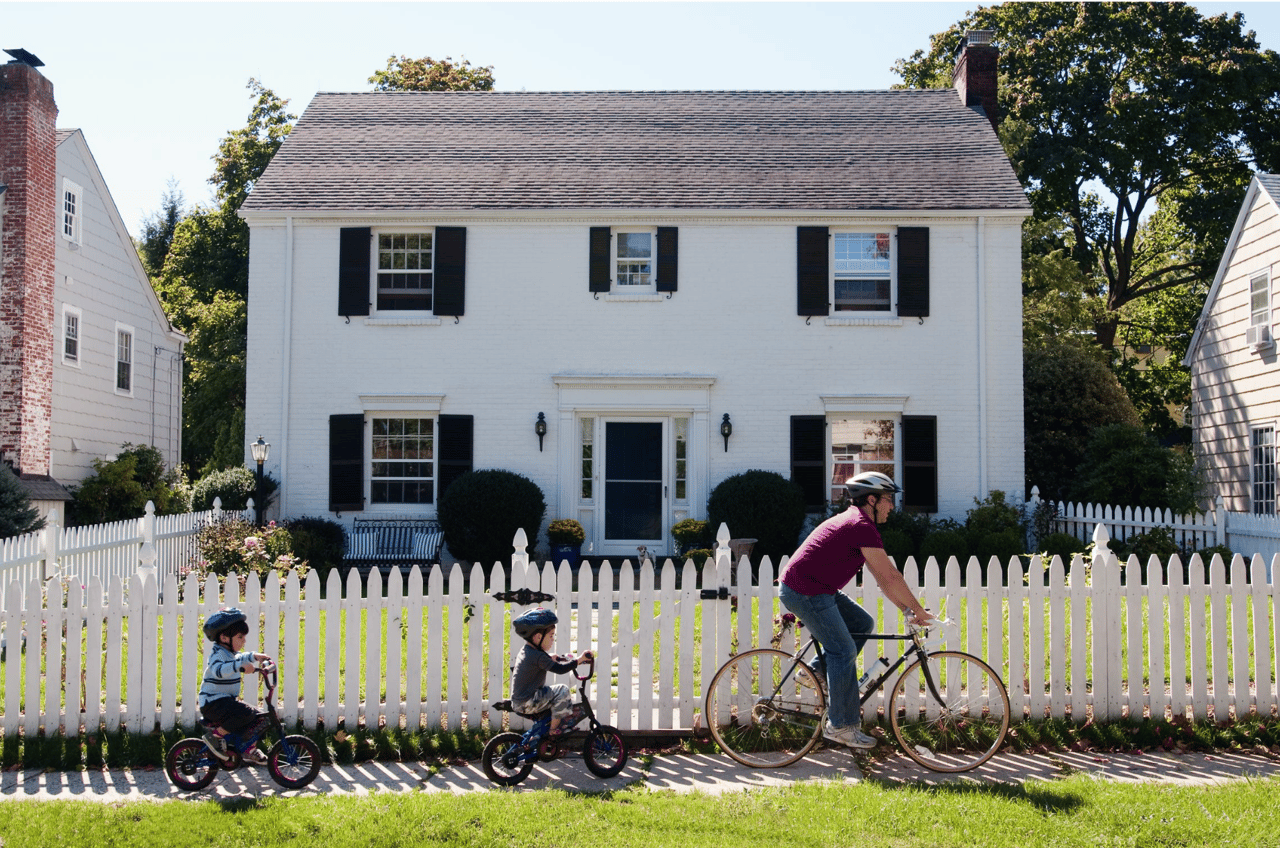
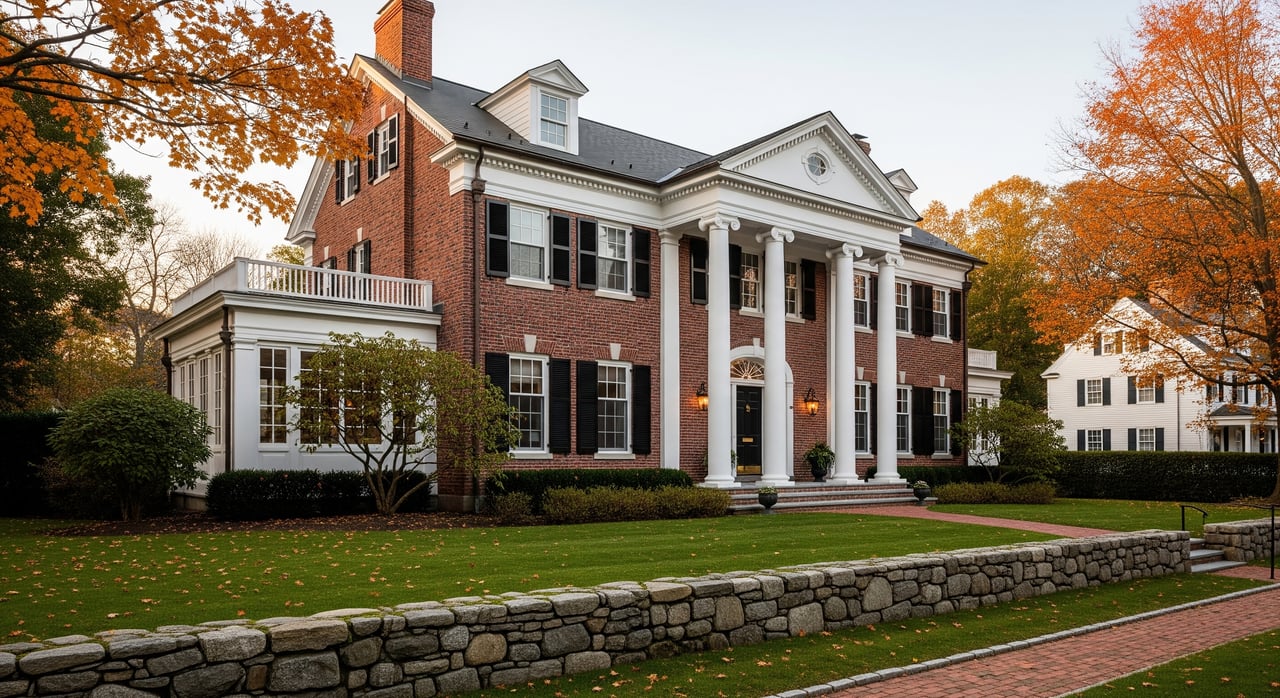
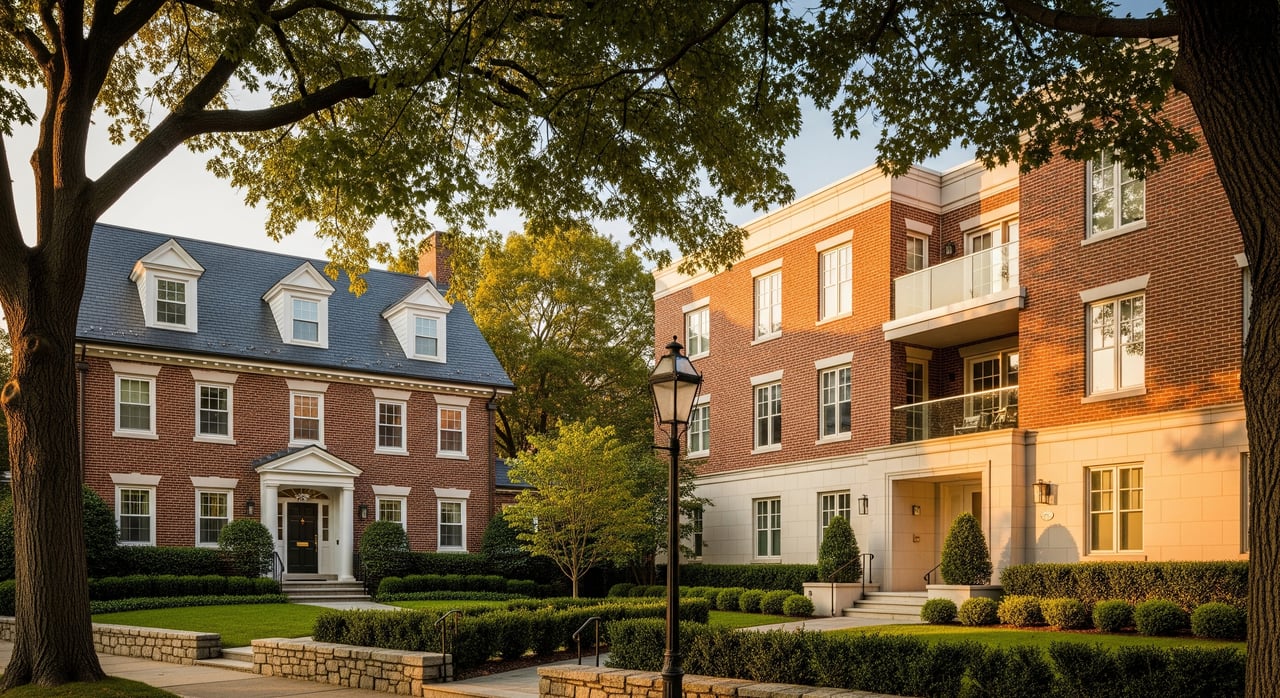
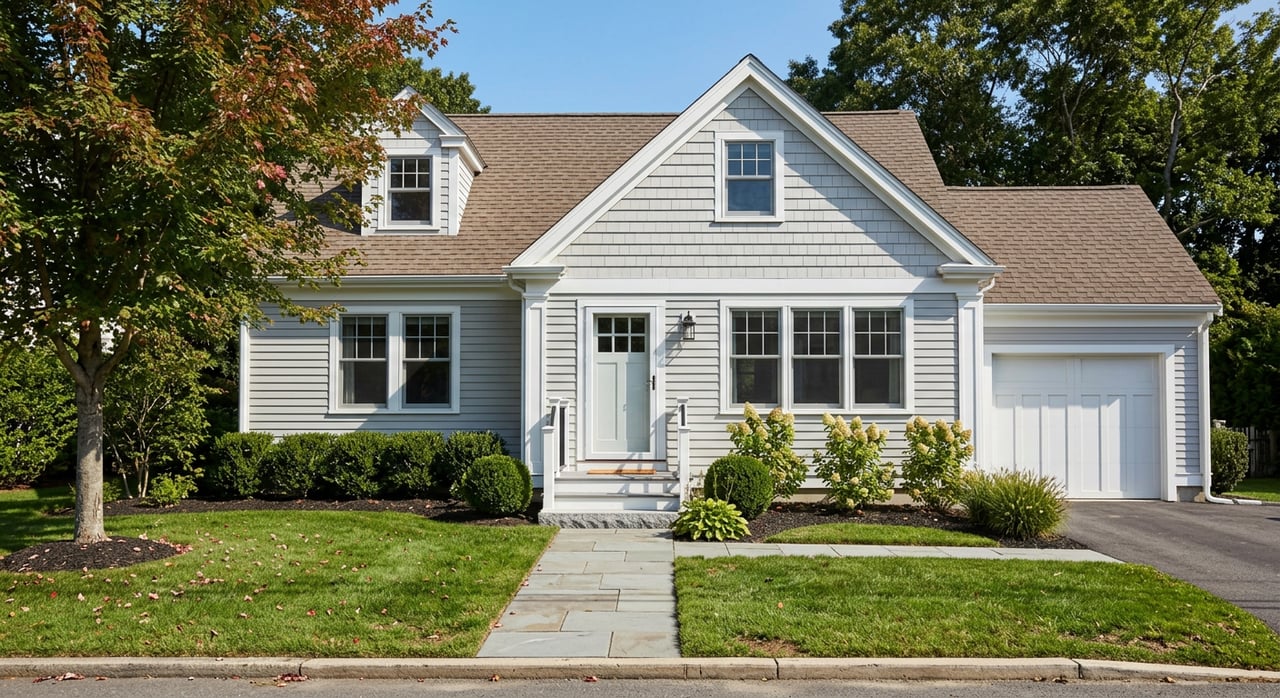
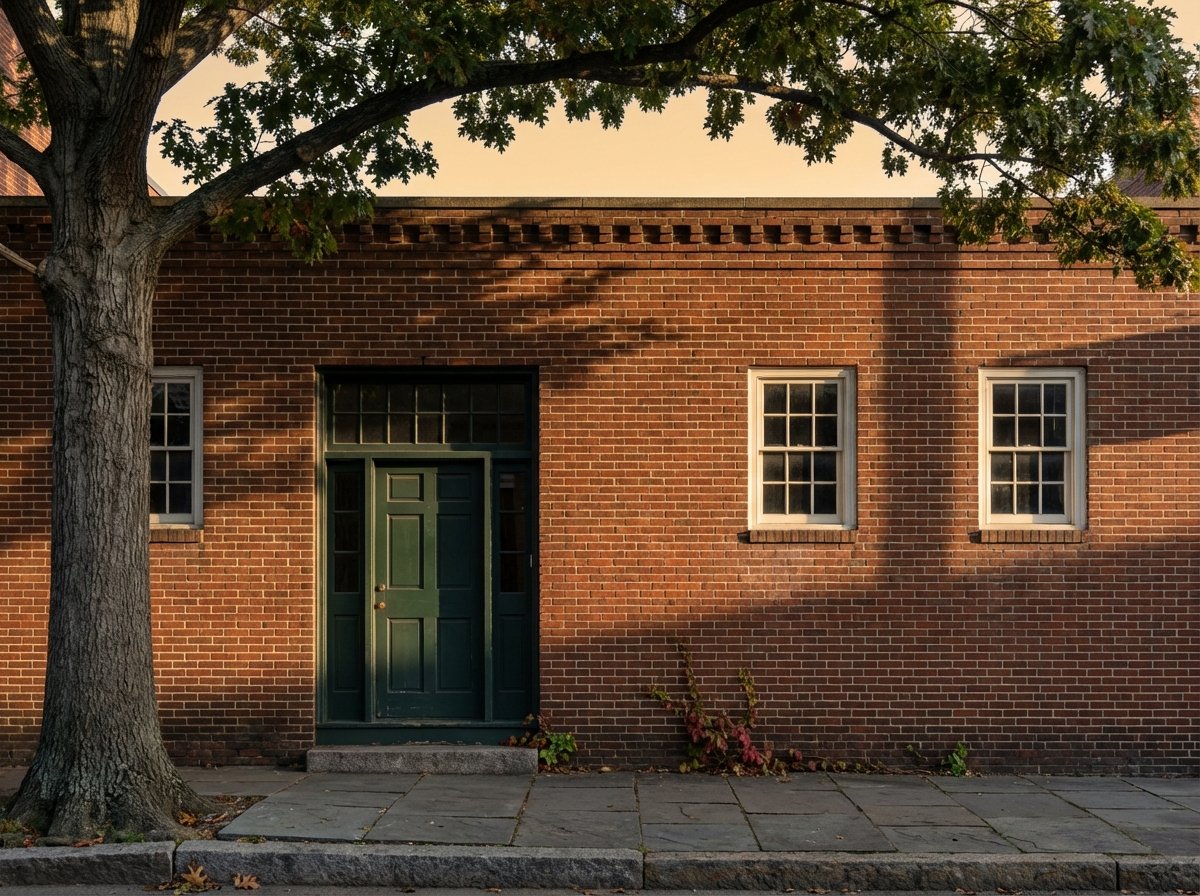
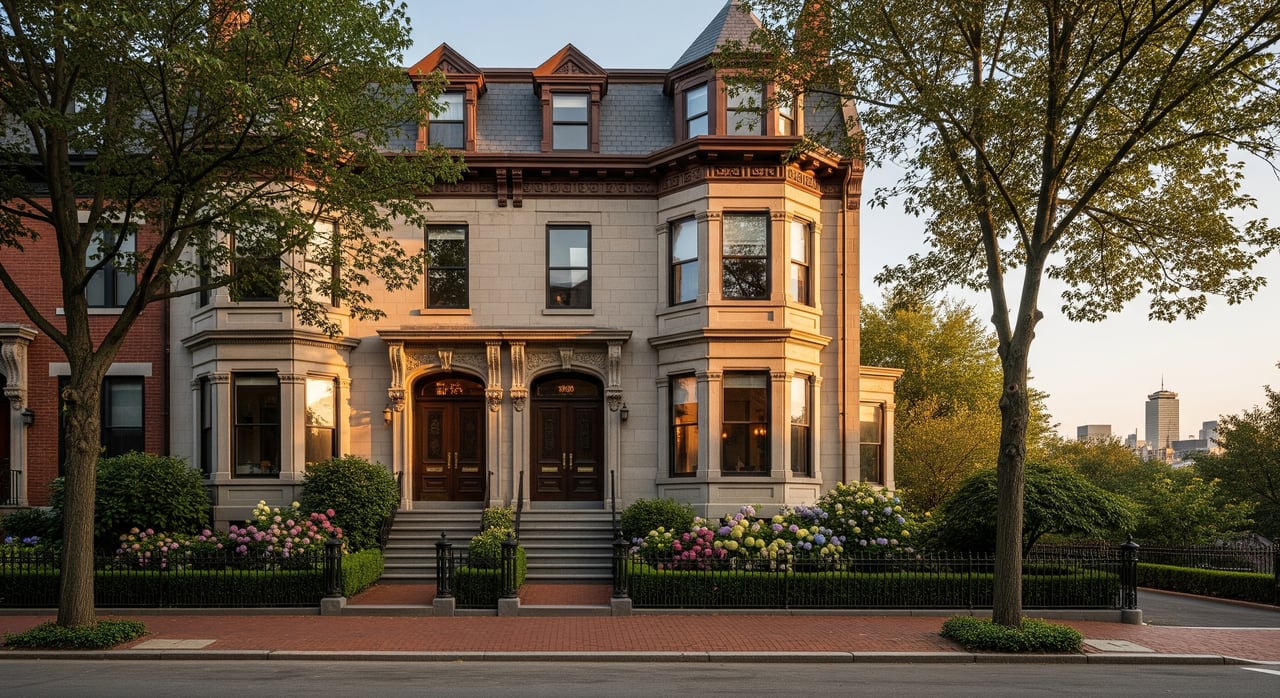
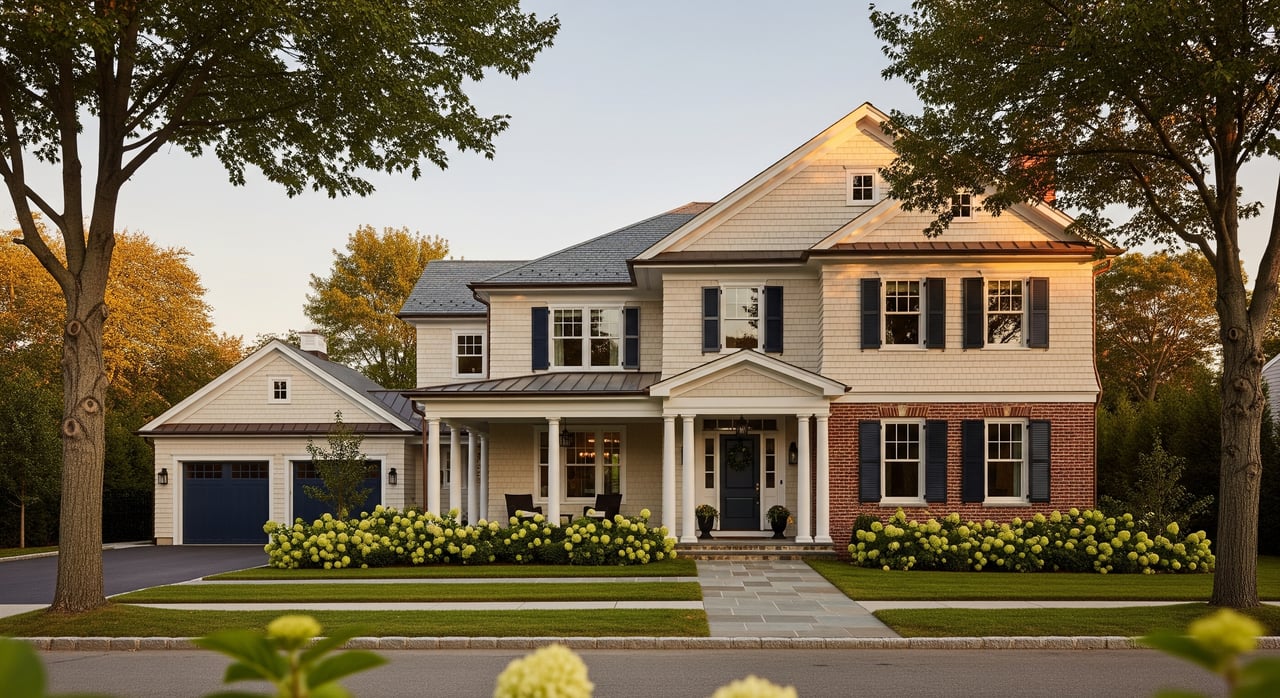
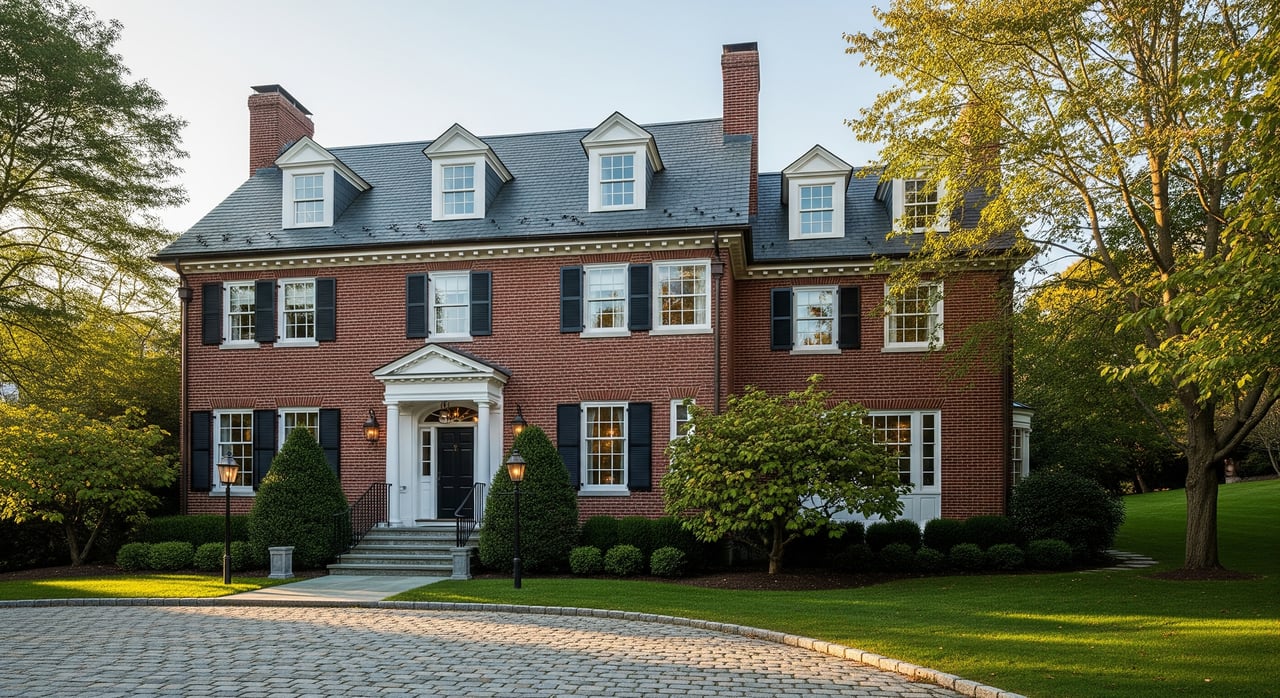
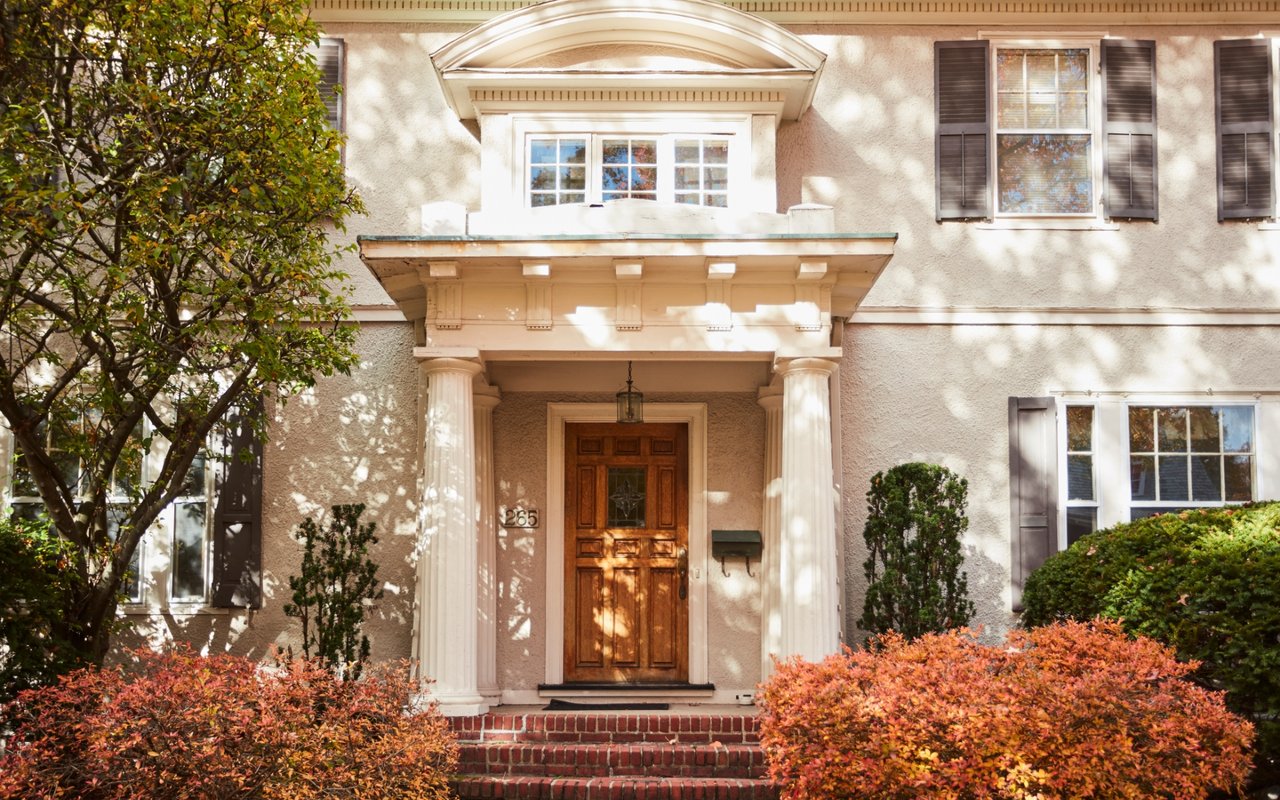
Brookline Village and the streets leading to it carry more Second Empire and Mansard-roofed double houses, with the high ceilings and tall windows that characterize that period. South Brookline and Fisher Hill are where you'll find the Colonial Revival estates: formal brick exteriors, generous setbacks, and the kind of mature landscaping that takes decades to establish.
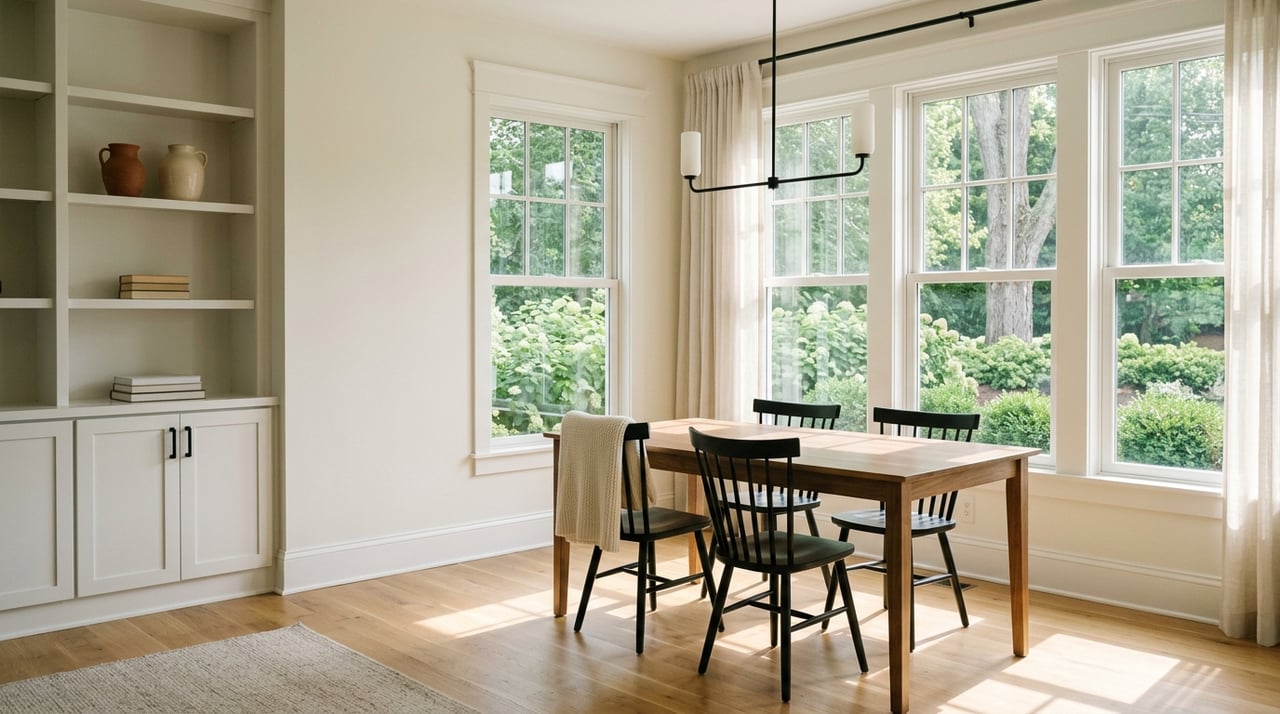
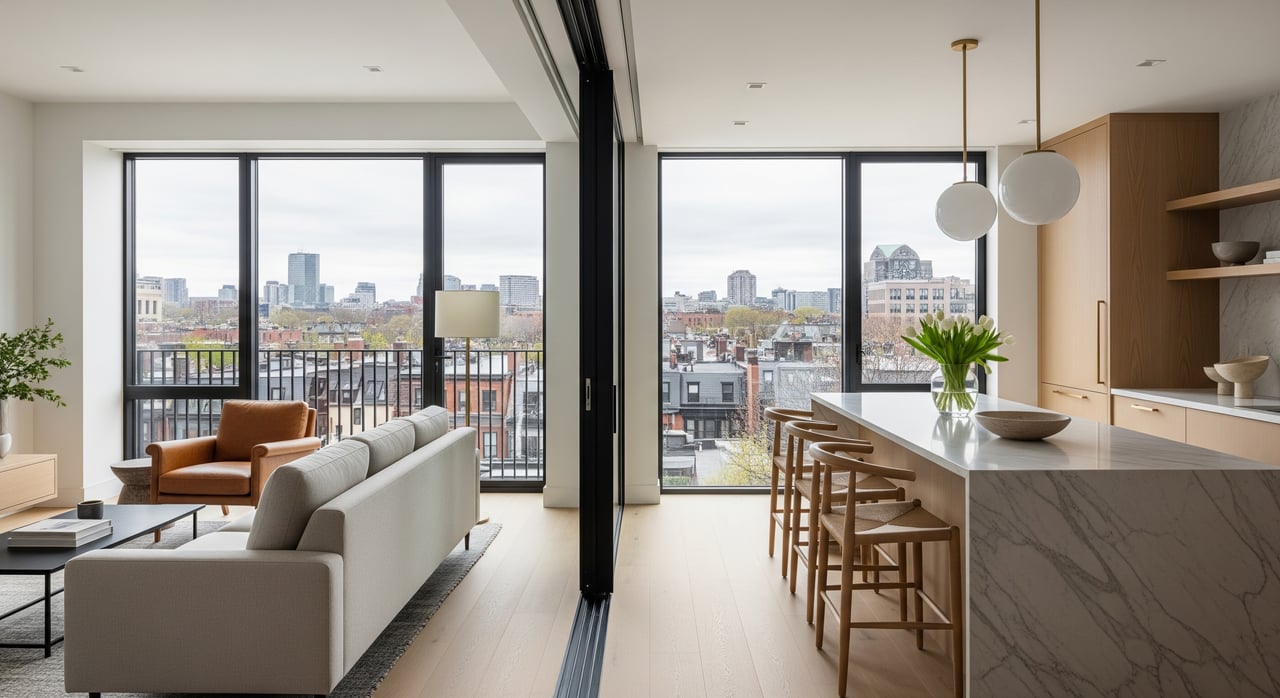
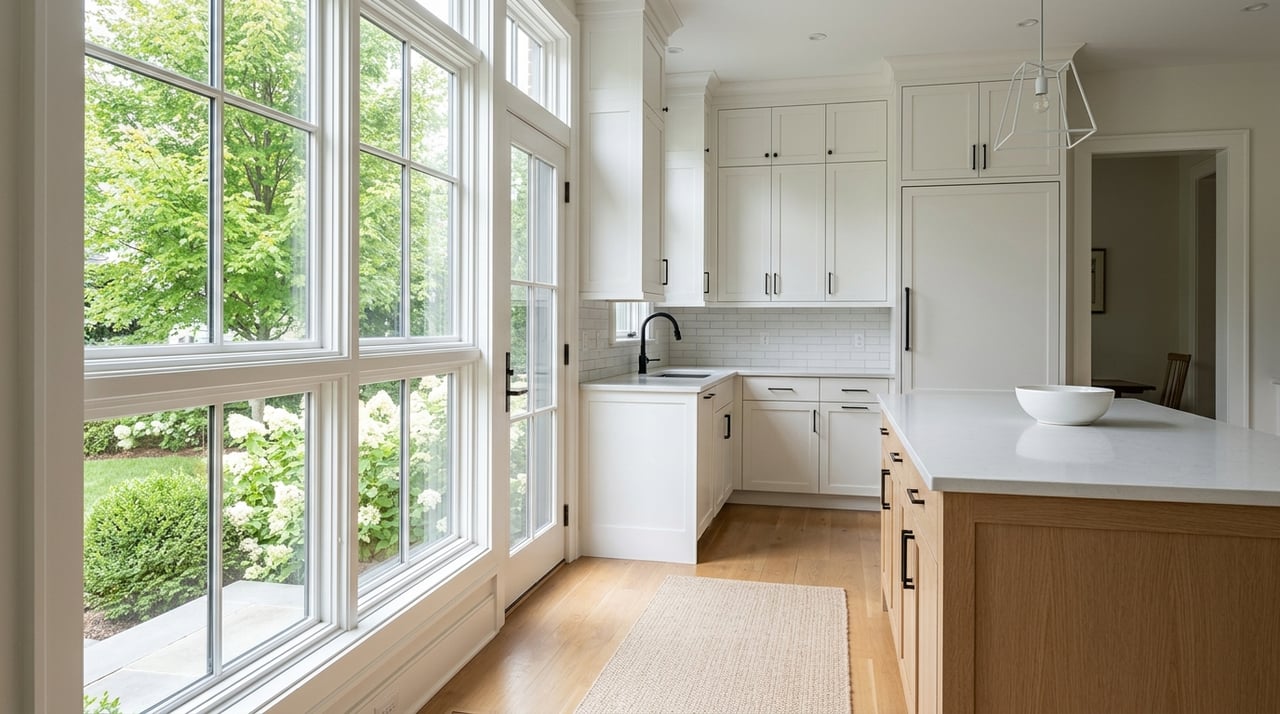
In 2026, the renovation trend in Brookline is toward what designers are calling warm minimalism. Owners of historic shells are gutting interiors to expose original structural elements while introducing organic curves, natural plaster walls, and wellness-focused layouts that maximize light. The exterior preservation requirement is not negotiable — the town's Preservation Commission maintains jurisdiction over any visible exterior change in Local Historic Districts — so the tension between modern interior expectations and historic exterior character is a defining condition of renovation work here.
Brookline is one of the few communities in Greater Boston where giving up a car is a practical option for daily life, not just an aspiration.
The Green Line is the backbone. The C-Branch runs along Beacon Street, with the MBTA currently completing a major accessibility upgrade that is consolidating some stops to improve service speed. The D-Branch, which passes through Brookline Village and Beaconsfield, is generally faster for trips heading to North Station or Government Center and is often the preferred route for Longwood-area commuters. For residents in the northern neighborhoods, the Number 66 bus connects directly to Harvard Square and Allston.
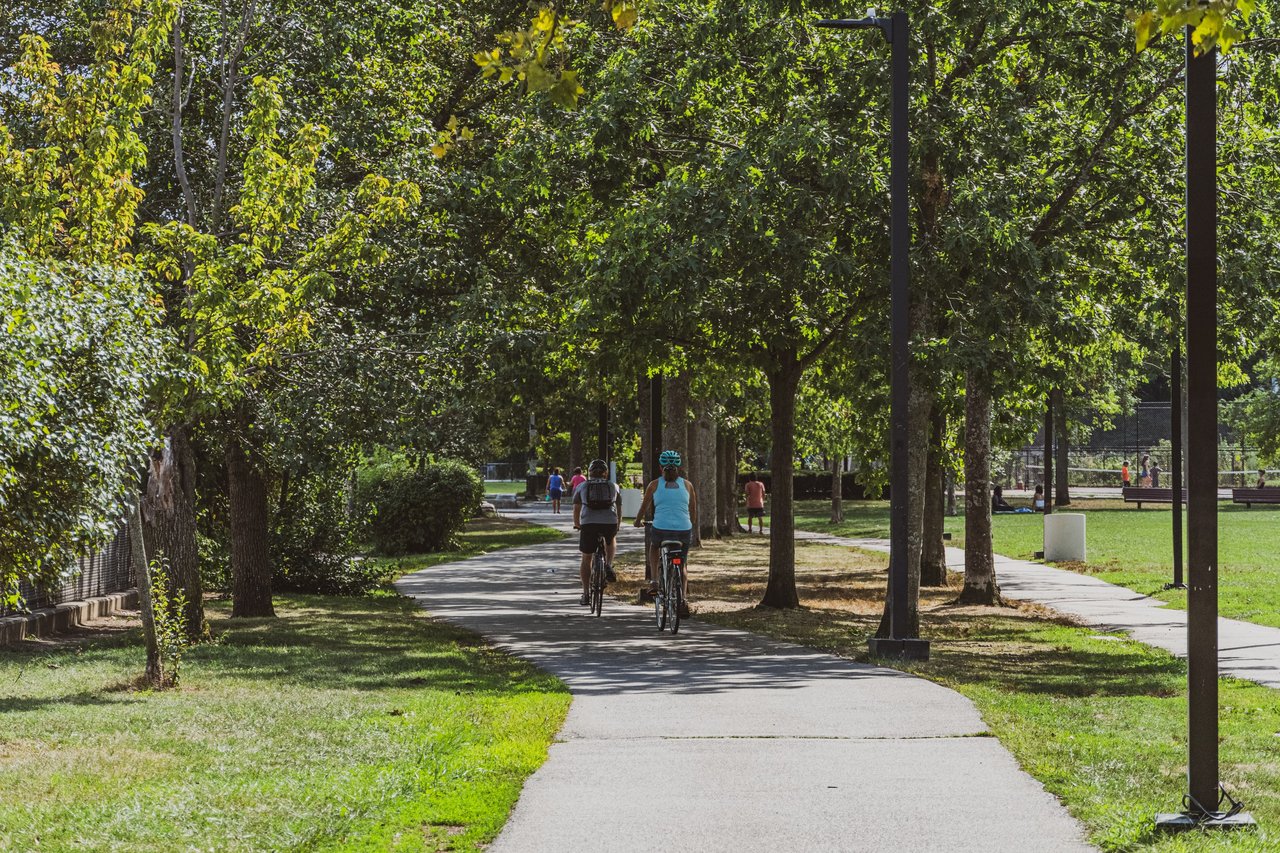
Walk scores in North Brookline regularly reach the 90s, and many residents genuinely go weeks without needing a car for daily needs. The Emerald Necklace path system makes cycling to the Longwood Medical Area and beyond a realistic commute option for much of the year. Brookline is expanding its Bluebikes network in 2026, with new stations added near Beaconsfield and Longwood.
The parking situation requires direct attention from anyone relocating here with a vehicle. Brookline prohibits overnight street parking between 2:00 AM and 6:00 AM. There are no permit exceptions, no grace periods, and no practical workarounds for residents who need on-street parking as a primary solution. Any property you are seriously considering needs to account for this at the outset.
The public school system is, without question, the primary engine of Brookline's real estate values. Understanding how it functions is essential for any family buyer, and the nuances matter more here than in most comparable communities.
Brookline operates a K-8 neighborhood school model. Your address assigns your children to one of eight elementary and middle schools, where they will remain for nine years. There is limited intra-district choice, which means the school boundary question is a purchase decision, not a post-purchase administrative detail. Two nearly identical properties on different sides of a boundary line have traded at measurably different prices, and the market understands this.
Lawrence and Pierce schools, serving high-density North Brookline, consistently rank in the top ten in the state and are known for high parental engagement and strong academic programming. Driscoll recently completed a comprehensive facility modernization and is now among the most technologically advanced K-8 buildings in Massachusetts. Florida Ruffin Ridley, the district's largest K-8, serves the heart of Coolidge Corner. Baker and Edith C. Baker serve South Brookline and Chestnut Hill, offering a more traditional campus environment with greater outdoor space.
All Brookline public school students eventually converge at Brookline High School, a large campus-style institution with a new building recently constructed over the MBTA tracks. The school's Freedom Plan gives students significant scheduling autonomy and a collegiate atmosphere that is well-regarded nationally.
For families considering private options, Dexter Southfield, Park School, and Maimonides School are the most prominent institutions in and around town.
One boundary-specific detail worth raising with your agent: certain streets near district boundaries fall into buffer zones where enrollment can be split between two schools depending on capacity. This is not common, but for families with a strong preference, it warrants direct verification with the district before closing.
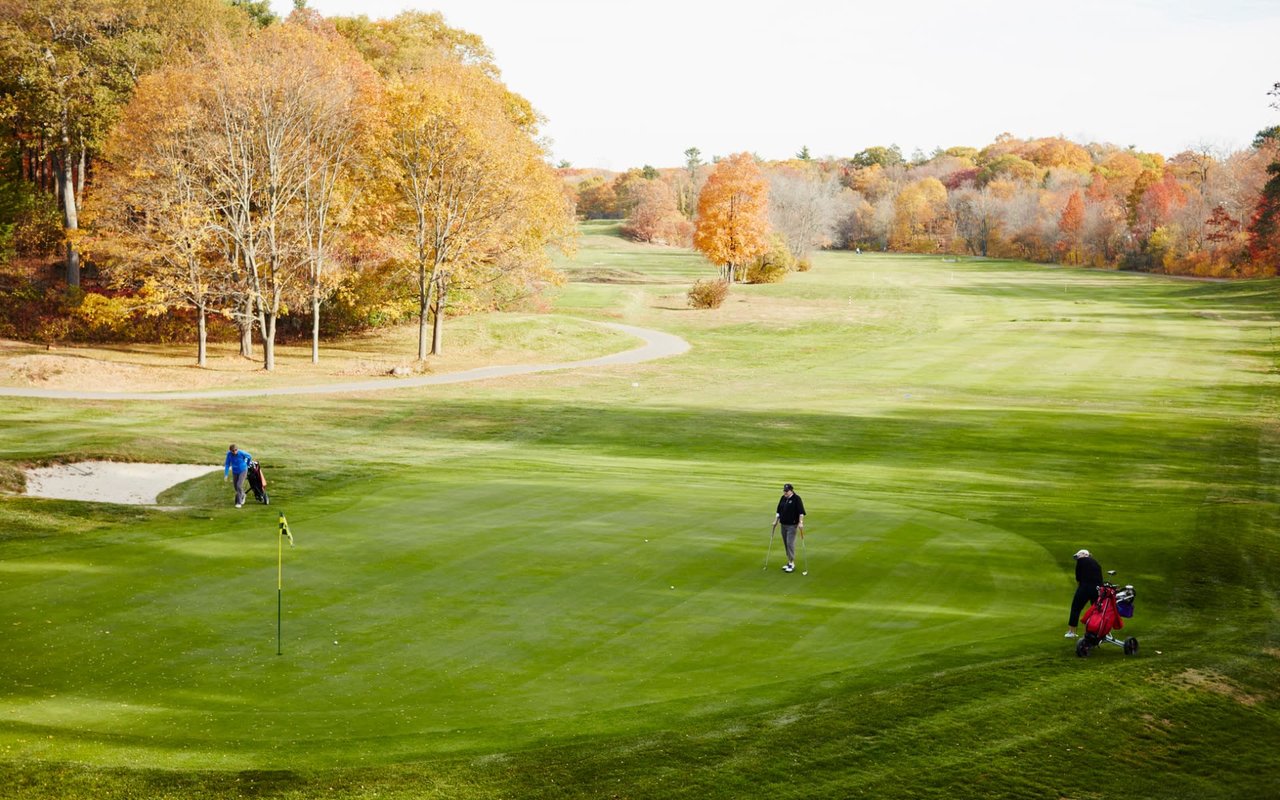
Brookline takes its green space seriously, and the quality shows. The town manages its parks with the same level of civic investment it brings to its schools.
The Emerald Necklace, designed by Frederick Law Olmsted, forms the town's primary outdoor corridor. Olmsted Park and The Riverway create a lush, continuous path along Brookline's Boston border, heavily used by runners, cyclists, and anyone who wants to move through the landscape without dealing with traffic. It is one of the genuinely great amenities of living here.
Larz Anderson Park in South Brookline spans 64 acres and is the most versatile outdoor destination in town. It offers a picturesque pond, the oldest automobile museum in the country, the town's most popular Green Dog off-leash area, and terrain that becomes a reliable sledding destination in winter. On warm weekends, it is where Brookline gathers.
The Green Dog Program is worth understanding before you move here with a dog. Brookline has 14 designated off-leash areas across various parks, but access requires a town-issued Green Dog tag, and the off-leash hours are regulated. It is a well-run system, but it requires a registration step that catches new residents off guard.
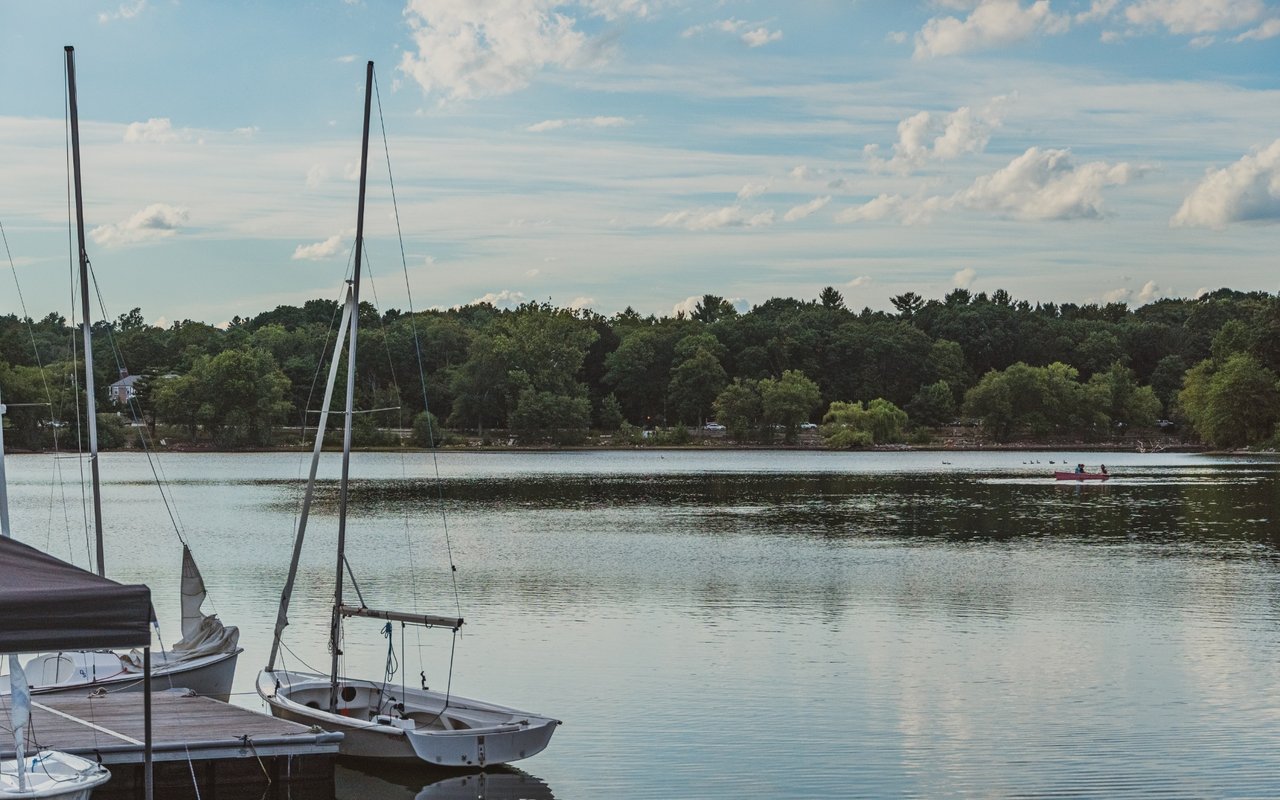
Hall's Pond Sanctuary in North Brookline is the quieter counterpart to Larz Anderson — a natural pond with boardwalks and a formal garden that sits just far enough from Coolidge Corner's activity to feel like genuine escape.
Brookline's food and drink scene reflects its residents: it skews toward quality and depth over novelty and volume. This is not a bar-hopping town. The dominant mode is the long dinner, the wine bar with serious selection, and the neighborhood spot you return to for years.
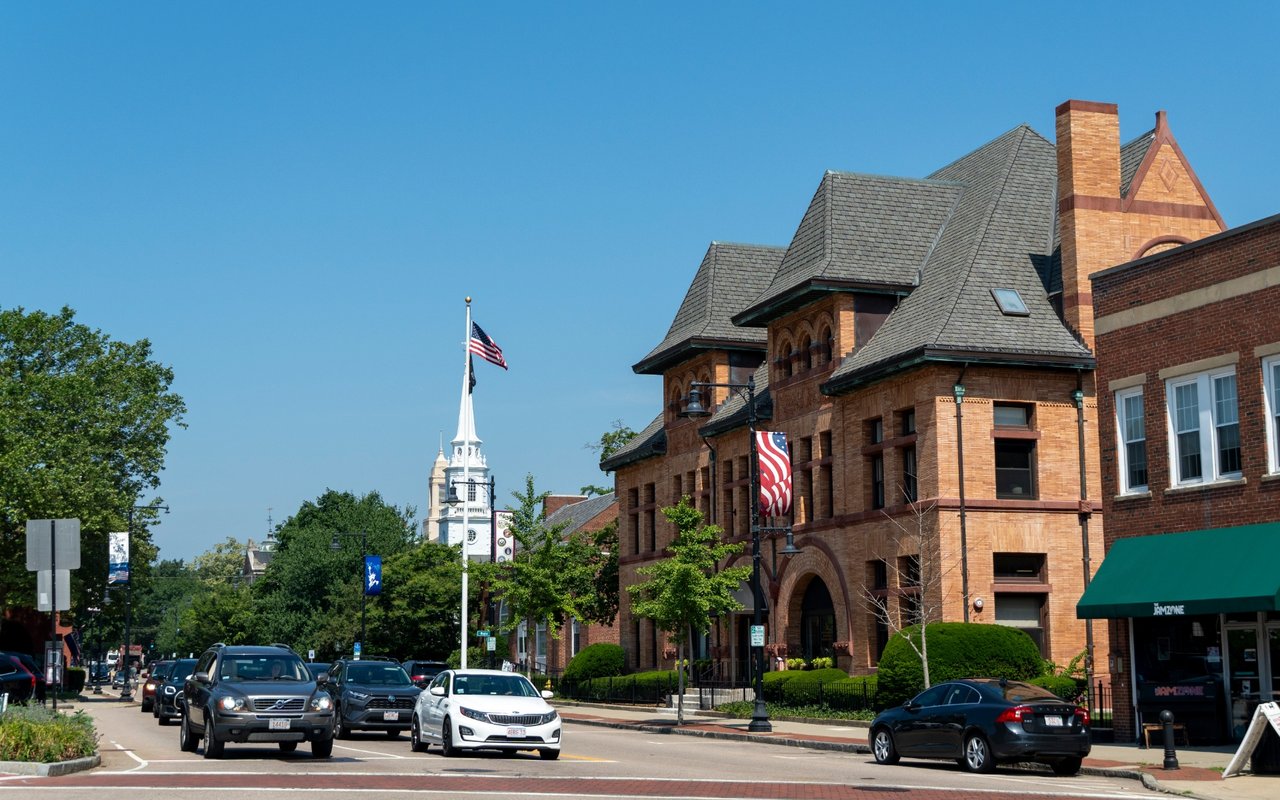
Coolidge Corner is the center of gravity. Zaftigs Delicatessen has served as a neighborhood institution for decades and remains one of the best examples of the Jewish deli tradition that shapes so much of North Brookline's identity. Prairie Fire has established itself as the area's most animated gathering spot for wood-fired pizza and a genuine bar scene. The Coolidge Corner Theatre, which shows independent and arthouse film, sets the cultural tone for the entire neighborhood.
Brookline Village offers a more intimate register. The Publick House is a destination for serious Belgian beer drinkers, drawing regulars from across the metro. La Morra has long been the neighborhood's answer for high-quality Italian. Washington Square, a few blocks west, attracts a younger professional crowd at Barcelona Wine Bar and The Abbey.
The overall dining identity is genuinely diverse: the town has a strong foundation in Jewish deli and international cuisine — Japanese, Italian, and an emerging category of ingredient-focused modern American — alongside a sophisticated natural wine culture that has grown substantially in the last few years.
If your social life revolves around late-night venues or high-energy nightlife, Brookline is not the right fit. If it revolves around a table, a good bottle, and the kind of neighborhood restaurant where the staff knows your order, few places in Greater Boston do it better.
The Muncey Group brings deep knowledge of the Brookline market to every transaction — whether you are navigating your first purchase in Coolidge Corner, evaluating a South Brookline estate, or preparing a long-held property for today's more discerning buyers. Their team understands the nuances that define this town: the school zone boundaries that move prices, the historic district regulations that shape renovation plans, and the sub-market dynamics that require precision pricing rather than broad averages.
If you are thinking about buying or selling in Brookline, reach out to the Muncey Group directly. A conversation about your specific situation is always the right place to start.
There's plenty to do around Brookline, including shopping, dining, nightlife, parks, and more. Data provided by Walk Score and Yelp.
Explore popular things to do in the area, including Koerner Dorothy L Psychothrpst, Shea William D Orthopdc Surg, and Shea William D Surg.
| Name | Category | Distance | Reviews |
Ratings by
Yelp
|
|---|---|---|---|---|
| Active | 0.32 miles | 0 reviews | 0/5 stars | |
| Active | 0.41 miles | 0 reviews | 0/5 stars | |
| Active | 0.41 miles | 0 reviews | 0/5 stars | |
| Active | 0.47 miles | 0 reviews | 0/5 stars | |
| Active | 0.6 miles | 0 reviews | 0/5 stars | |
| Active | 0.6 miles | 0 reviews | 0/5 stars | |
| Active | 0.89 miles | 0 reviews | 0/5 stars | |
| Active | 0.92 miles | 0 reviews | 0/5 stars | |
| Active | 0.94 miles | 0 reviews | 0/5 stars | |
| Active | 1.08 miles | 0 reviews | 0/5 stars | |
| Active | 1.19 miles | 1 review | 5/5 stars | |
| Active | 1.2 miles | 0 reviews | 0/5 stars | |
| Active | 1.26 miles | 0 reviews | 0/5 stars | |
| Active | 1.29 miles | 0 reviews | 0/5 stars | |
| Active | 1.3 miles | 0 reviews | 0/5 stars | |
| Active | 1.33 miles | 0 reviews | 0/5 stars | |
| Active | 1.33 miles | 0 reviews | 0/5 stars | |
| Active | 1.34 miles | 1 review | 1/5 stars | |
| Beauty | 0.6 miles | 0 reviews | 0/5 stars | |
| Beauty | 0.6 miles | 0 reviews | 0/5 stars | |
| Beauty | 1.25 miles | 1 review | 5/5 stars | |
|
|
||||
|
|
||||
|
|
||||
|
|
||||
|
|
||||
|
|
Brookline has 27,210 households, with an average household size of 2.26. Data provided by the U.S. Census Bureau. Here’s what the people living in Brookline do for work — and how long it takes them to get there. Data provided by the U.S. Census Bureau. 62,822 people call Brookline home. The population density is 9,293 and the largest age group is Data provided by the U.S. Census Bureau.
Total Population
Population Density Population Density This is the number of people per square mile in a neighborhood.
Median Age
Men vs Women
Population by Age Group
0-9 Years
10-17 Years
18-24 Years
25-64 Years
65-74 Years
75+ Years
Education Level
Total Households
Average Household Size
Average individual Income
Households with Children
With Children:
Without Children:
Blue vs White Collar Workers
Blue Collar:
White Collar:

Office
20 Birch St
Roslindale, MA 02131
Compass Office
1330 Boylston St 2nd Fl
Chestnut Hill, MA 02467
Office
20 Birch St
Roslindale, MA 02131
Compass Office
1330 Boylston St 2nd Fl
Chestnut Hill, MA 02467