Boston triple deckers are one of the most recognizable housing types in New England. These three story homes shaped many of the city’s neighborhoods and continue to play an important role in today’s market. If you spend time in Roslindale or Jamaica Plain, you will see how common and practical they are for both residents and investors. This guide explains what triple deckers are, how they came to be, and why they remain relevant.
What Is a Triple Decker?
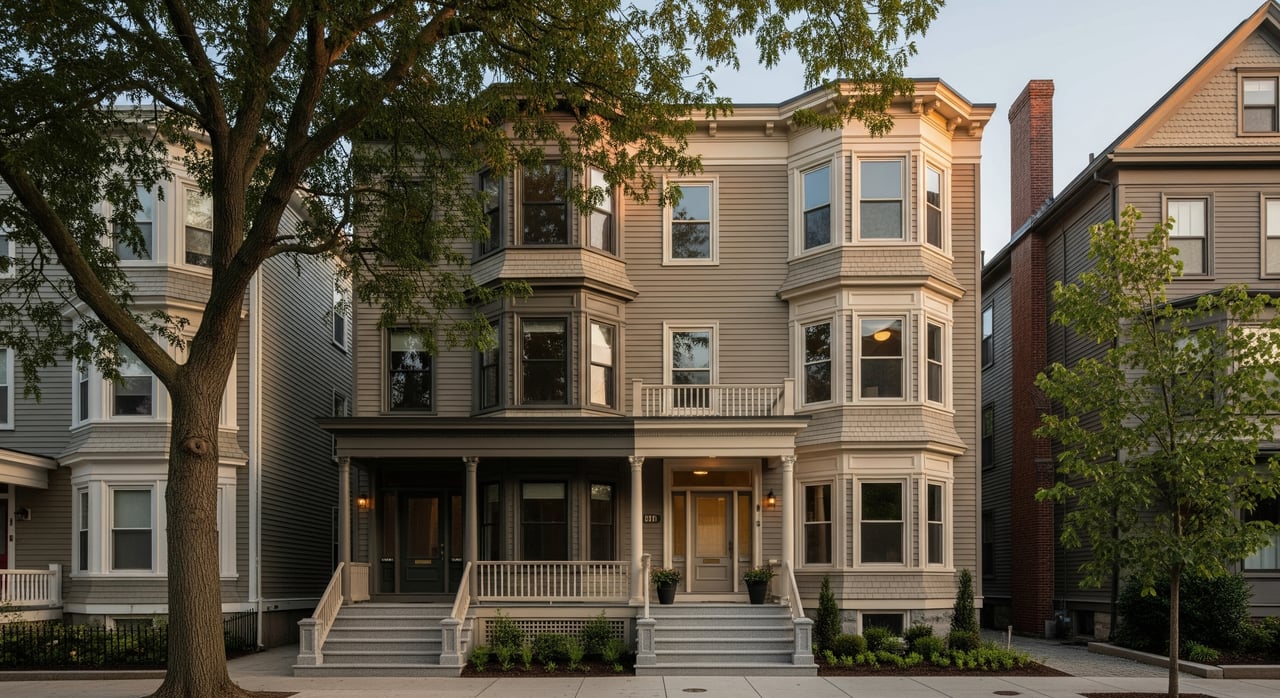
A triple decker is a three story multifamily home with one unit on each floor. Most were built between the late 1800s and early 1900s during a period of rapid population growth. The structure is usually wood framed, rectangular and designed to make efficient use of narrow city lots. Many triple deckers feature stacked porches, simple floor plans and shared entryways. The goal was to provide solid housing at a reasonable cost for workers and families.
A Short History of New England Triple Deckers
Triple deckers became popular as manufacturers expanded across Boston. Workers needed housing close to streetcars and jobs, and builders responded with a design that allowed quick construction and lower expenses. These homes filled entire streets in Boston, Worcester, Providence and other regional cities. Although the original purpose was affordability, many triple deckers have since been renovated and maintained. They continue to shape the identity of several Boston neighborhoods.
Key Architectural Features
Triple deckers share several consistent traits. The footprint is narrow with stacked units arranged one on top of another. Most have a single central staircase and a repeated floor plan from level to level. Wood siding, pitched roofs and covered porches appear often. Interior layouts usually include bedrooms toward the back, living areas toward the front and modest kitchens. Some buildings reflect influences from earlier architectural styles through small details such as decorative trim or window shapes.
Where Triple Deckers Are Common in Boston
Triple deckers are spread across the city, but several neighborhoods have notable concentrations.
Dorchester
Dorchester contains more triple deckers than any other neighborhood in Boston. Large sections of the area were built during the peak construction period for this housing type, which created long streets lined with three story buildings that follow consistent layouts. Many were owned by families who lived on one floor while renting the others, a pattern that shaped the neighborhood for decades. Today Dorchester offers a wide range of triple deckers in various stages of renovation, from long held family properties to fully updated buildings aimed at buyers seeking rental income. The neighborhood’s size and transit access continue to support interest in these homes, and its overall supply gives buyers more options than they will usually find in smaller parts of the city.
Roslindale
Roslindale grew quickly during the early 1900s as transit routes expanded. Triple deckers offered practical housing for workers who wanted to stay near the city while living on quieter streets. Today many of these homes remain in regular use. They appeal to buyers who want larger units than typical apartments and the possibility of rental income from additional floors.
Jamaica Plain
Jamaica Plain saw similar growth during the same period. Several areas including Hyde Square, Jackson Square and Forest Hills contain long blocks of triple deckers. Residents value the proximity to parks, transit and local businesses. The style fits well with the neighborhood’s older building stock and continues to attract both long time residents and new buyers.
Other Neighborhoods
Roxbury and Mattapan also contain many streets lined with these structures. Beyond city limits Somerville and Cambridge include clusters that were built during the same era.
Triple Deckers in Today’s Housing Market
Triple deckers remain important because they offer flexibility. Owners can live in one unit and rent the others to help cover expenses. Investors often choose them for stable rental income. Buyers who want multigenerational living also find them useful. Many have been updated with improved systems while still keeping original features. At the same time, there is ongoing interest in preserving these buildings as part of Boston’s history.
Benefits of Living in a Triple Decker
Residents often appreciate the spacious floor plans, private outdoor areas and the sense of community that comes from living in a smaller building. Outdoor porches provide valuable space for seating or storage. Owner occupants also gain the advantage of rental income when buying a full three unit building. In neighborhoods like Roslindale and Jamaica Plain, triple deckers offer access to transit, parks and local retail areas.
What Buyers Should Look For
Buyers should pay attention to structural condition, age of major systems and quality of past renovations. Many triple deckers are more than one hundred years old, so foundation stability and roof condition matter. Updated plumbing, electrical and heating systems can save future expenses. It is also important to confirm that all units are legally recognized. Original woodwork, built ins and flooring may add value if well maintained.
Renovation and Restoration Considerations
Owners often upgrade kitchens, bathrooms and insulation to improve comfort and energy efficiency. Exterior repairs such as siding replacement or porch reconstruction are common. Because these homes are older, it is helpful to work with contractors who understand how to work within the existing structure. In some cases, local permits and approvals may be required for major changes.
How to Read a Triple Decker From the Street
People often want to know how old a triple decker is or whether it has been heavily renovated, but most buyers do not realize that the exterior provides several clues. These details are specific to Boston’s building history and are especially noticeable in neighborhoods like Roslindale and Jamaica Plain.
1. Porch style tells you the construction decade
Triple deckers built before 1910 often have turned wood porch columns that look thinner and more decorative. Houses built between 1910 and 1925 usually have squared off columns with simple capitals. If you see metal porch supports, the originals were likely replaced during a mid century repair. In Roslindale, many of the older streets near Roslindale Square still show original columns.
2. Window spacing reveals the floor plan
Triple deckers follow a repeated layout, but early builders experimented. Narrow spacing between front windows usually indicates an early unit configuration with double parlors. Wider spacing suggests post 1915 layouts that favored a more defined living room and dining area. Jamaica Plain has several examples around Hyde Square where both layouts appear on the same block, which helps buyers compare design eras in real time.
3. Roofline changes show whether the attic was ever used
Original triple deckers often have steeply pitched hip roofs. If the roof looks lower or flatter, it may have been rebuilt after a fire or converted to allow attic storage. A raised central section can signal past attempts to expand the building, which matters for buyers planning future projects.
4. Siding materials reflect renovation history
Original wood clapboard is common on streets built before World War I. Triple deckers that went through renovations during the 1960s to 1980s often have aluminum or early vinyl siding. Newer vinyl siding has cleaner seam lines and sharper colors. In Jamaica Plain, sections near Forest Hills still show rows of wood sided homes that tell you they have had fewer exterior alterations.
5. Entry configuration hints at owner occupancy
When the main entry door is more ornate or freshly maintained than the side entries, it often indicates an owner occupied building. Owner occupants tend to preserve trim detail around their own entry. This pattern appears frequently on Roslindale triple deckers that have had the same owner for many years.
6. Porch rail height indicates the timing of code updates
Older triple deckers originally had shorter porch rails. Massachusetts updated height requirements multiple times. Taller rails with modern spacing mean the porch has been rebuilt within the last twenty years. This gives buyers a clue about the age of critical exterior work without needing records.
FAQ About Triple Deckers in Boston
Are triple deckers good investment properties?
Yes. Rental income from two units can help offset ownership costs. Many investors and owner occupants consider them reliable long term holdings.
How old are most triple deckers?
Most were built between 1880 and 1930. The majority have been updated over time, but the core structure is usually original.
Do triple deckers require more maintenance than newer buildings?
They can. Age and materials matter. Regular inspection and preventative work help reduce long term issues.
Can triple deckers be converted into condos?
Yes. Many have already been converted. The feasibility depends on condition, layout and zoning rules.
What neighborhoods have the most triple deckers?
Dorchester has the largest number. Roslindale, Jamaica Plain, Roxbury and Mattapan also contain many.
Work With the Muncey Group
Triple deckers remain an important part of Boston’s housing supply. They offer flexible living arrangements, investment potential and a strong connection to the region’s history. Roslindale and Jamaica Plain stand out as neighborhoods where these homes continue to play a central role. For buyers considering this style, understanding its structure and history can help guide a confident decision.
If you are thinking about buying or selling a triple decker in Roslindale, Jamaica Plain or any other Boston neighborhood, the Muncey Group can guide you through the process with clear communication and local knowledge. Contact the Muncey Group to start your search or discuss your goals.